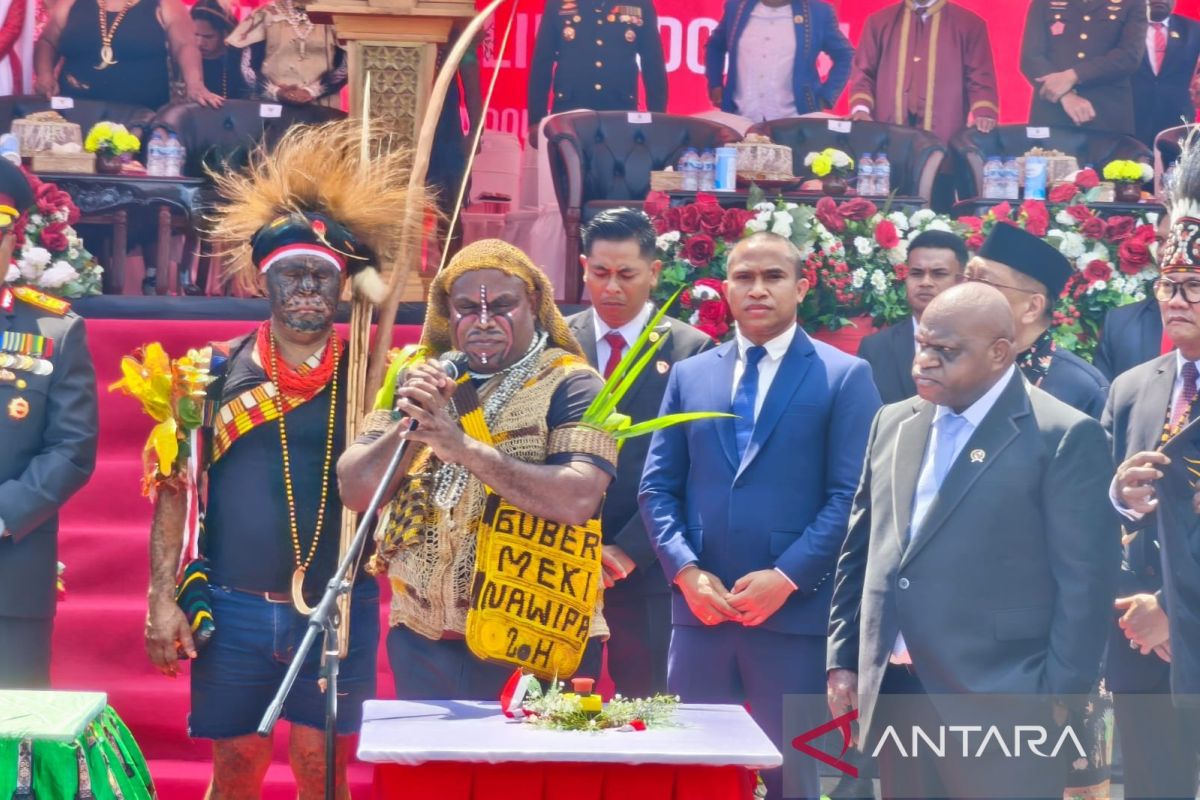
More than 64,000 students and university learners in Central Papua are benefiting this year from a provincial free-education program designed to remove financial barriers and expand access to learning. The initiative covers more than 58,000 students in junior secondary, senior secondary, vocational and special-needs schools, as well as school boarding facilities, alongside approximately 6,000 Central Papuan students pursuing higher education in different regions.
Announced by Central Papua Governor Meki Nawipa in Nabire, the program reflects a broader effort to prevent poverty from interrupting children’s education and to build a stronger human-capital foundation for the province.
According to reports published by ANTARA News, the provincial administration considers education assistance a central component of its social and development agenda. By covering schooling costs for students and supporting university attendance beyond the province, the government is seeking to ensure that geography and household income do not determine who can continue studying.
The policy also responds to the risk of school dropouts, particularly among families facing economic pressure, while widening opportunities for young people to acquire the skills needed for further study, employment and regional development.
Expanding Access Across Schools and Universities
The program’s scale is significant for a province where many communities are separated by challenging terrain and long distances from major education centers. Funding reaches students enrolled in junior secondary schools, senior secondary schools, vocational institutions, special-needs schools and boarding schools, creating a more comprehensive support system than a narrow tuition subsidy.
It also assists students from Central Papua who are studying outside the province, allowing talented young people to pursue academic pathways that may not yet be available in their home communities.
For students enrolled overseas, the provincial government has allocated approximately 30 billion rupiahs per year through a grant mechanism. That commitment gives international students a more stable foundation for completing their studies and returning with knowledge that can contribute to Central Papua’s future.
Overseas education support can also expand exposure to different technologies, professional standards and research networks, strengthening the province’s ability to participate in Indonesia’s wider economic and social transformation.
Investing in Teachers and Learning Quality
Governor Nawipa has emphasized that widening access must be matched by improvements in teaching quality. Over the past two years, the provincial administration has financed certification for 1,800 teachers, a measure intended to strengthen professional standards while improving educators’ welfare through additional incentives. The investment recognizes that free education can deliver lasting results only when students have access to qualified, motivated and adequately supported teachers.
Teacher certification and incentive support may also help schools retain skilled educators and encourage them to serve in areas where staffing is difficult. Better-supported teachers are positioned to provide more consistent instruction, identify learning challenges earlier and guide students toward further education or vocational opportunities.
In this sense, the program combines immediate financial relief for families with a longer-term strategy to improve the quality and resilience of Central Papua’s education system.
As adapted from reporting by ANTARA News, the governor has urged students, university learners, teachers and recipient schools to make the fullest possible use of the assistance. He said the province wants Central Papua’s children to become not only intelligent, but also honest, principled and determined to keep moving forward.
With more than 64,000 learners supported and thousands of teachers receiving professional assistance, the initiative offers a practical platform for inclusive development—one that links household affordability, educational opportunity and the province’s long-term investment in capable, ethical citizens.
