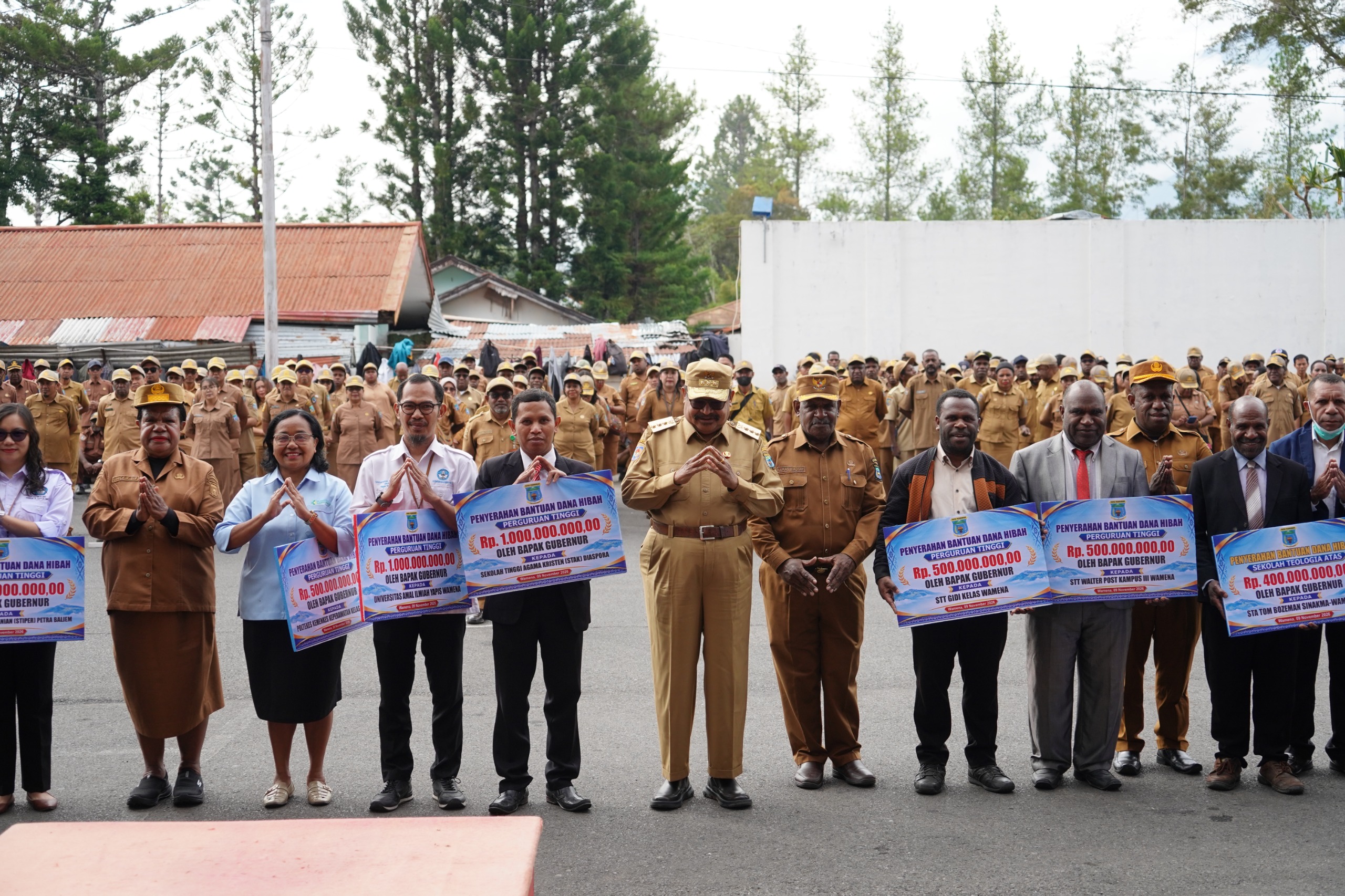
Fourteen higher-education institutions in Indonesia’s Papua Highlands are set to receive funding from the region’s Special Autonomy program, marking a significant investment in human capital and long-term development. The allocation was announced under the administration of Papua Highlands Governor John Tabo and Deputy Governor Ones Pahabol, with the funds intended to support campuses serving communities across the mountainous province.
The initiative places universities and colleges at the center of efforts to expand opportunity, improve professional skills and build a stronger locally trained workforce.
As adapted from reporting by Papua Times, the funding decision reflects the provincial government’s effort to direct Special Autonomy resources toward education, one of the most important foundations for inclusive growth in Papua. The report identifies 14 campuses as recipients, although it does not publish individual allocation amounts, detailed spending plans or a timetable for disbursement.
Those details will be important for assessing how effectively the program strengthens teaching, research, student services and institutional capacity.
Education as a Foundation for Sustainable Development
For Papua Highlands, where difficult geography and long distances have historically complicated access to public services, stronger local campuses can deliver benefits far beyond the classroom. Universities and colleges can train teachers, health workers, engineers, administrators, entrepreneurs and other professionals who understand the region’s social and environmental conditions.
Building that talent base locally can reduce dependence on outside personnel while enabling development programs to be designed with greater sensitivity to indigenous communities and remote settlements.
Special Autonomy funding also creates an opportunity to connect higher education with the province’s practical development priorities. Campuses can support research into mountain agriculture, watershed protection, renewable energy, public health, transportation and digital connectivity, while preparing graduates for careers in both government and the private sector.
With appropriate oversight, the investment can help turn institutions of learning into regional innovation centers that generate knowledge, employment and solutions suited to Papua’s distinctive landscape.
Strengthening Communities Through Local Capacity
The impact of the program will ultimately be measured by how funding reaches students, lecturers and surrounding communities. Support for scholarships, laboratories, libraries, internet access, academic accreditation and vocational programs could widen participation for young people who might otherwise have to leave Papua to pursue higher education.
Expanded campus services could also benefit families through community health initiatives, legal assistance, agricultural extension, business mentoring and other forms of applied public engagement.
The initiative is particularly relevant to inclusive economic growth because education can help residents participate more fully in emerging regional markets. Better-trained graduates can improve the quality of public administration, strengthen local enterprises and support value-added industries rather than relying solely on the shipment of raw commodities.
When paired with transparent procurement and clear performance standards, Special Autonomy funding can create a virtuous cycle in which education improves livelihoods and stronger local economies, in turn, expand opportunities for future students.
Accountability and the Next Phase of Development
The provincial government’s challenge now is to ensure that the allocation produces measurable and lasting results across all 14 institutions. Public reporting on funding distribution, construction or equipment projects, student enrollment, graduation rates and employment outcomes would help communities track progress and build confidence in the program.
Coordination among campus leaders, local governments, indigenous representatives and national education authorities will also be essential to prevent duplication and ensure that remote areas are not overlooked.
According to reports published by Papua Times, the decision signals a development approach that treats education not as a secondary expense but as strategic infrastructure for Papua Highlands. If implemented with strong governance, environmental awareness and attention to local needs, the investment can strengthen regional connectivity, improve public services and expand pathways into dignified work.
The 14-campus program therefore represents an important step toward a more self-reliant Papua, where locally educated citizens help shape sustainable prosperity for their own communities.

