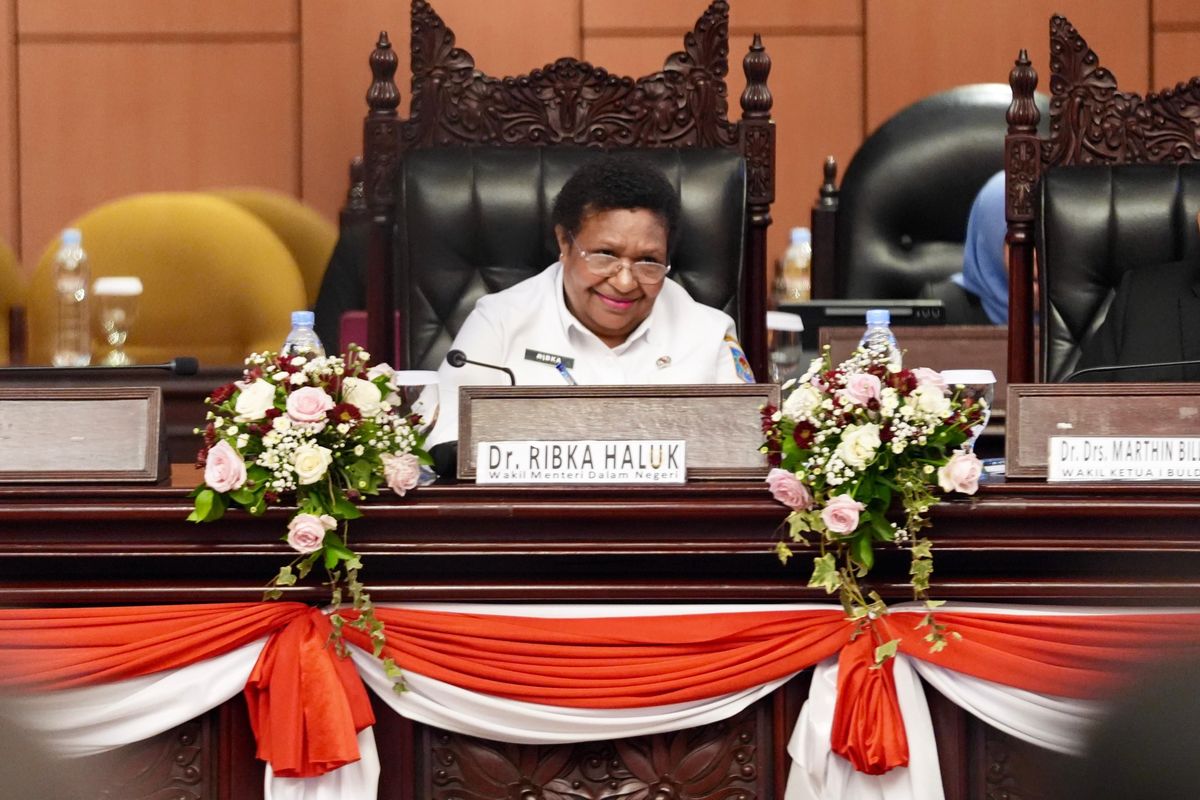
Indonesia is accelerating the construction of central government districts in four newly established autonomous regions of Papua, with the facilities targeted to begin operating by 2028. Deputy Minister of Home Affairs Ribka Haluk made the commitment during a coordination meeting with the Ministry of Public Works in Jakarta on November 19, 2026.
The initiative is intended to strengthen local administration, improve public services and provide the physical foundation for more balanced development across Southwest Papua, Central Papua, South Papua and Highland Papua.
Building the Foundations of Regional Government
The meeting reviewed progress on infrastructure for government centers in all four regions while examining funding requirements and construction continuity. These administrative hubs are expected to bring executive institutions, public agencies and essential services closer to communities that have historically faced long distances and difficult terrain when accessing government.
Their completion is therefore not only a construction milestone, but also a practical investment in more responsive, accessible and locally grounded governance.
As adapted from reporting by detikNews, Ribka Haluk praised the Ministry of Public Works for its commitment and emphasized that government facilities are central to the effective delivery of public services. She gave particular attention to the government center planned for Highland Papua, where construction requires continued coordination and funding certainty.
Infrastructure development in the other three autonomous regions has already advanced, making Highland Papua a priority in the next phase of implementation.
Funding Certainty and Sustainable Construction
Ribka called for firm budget allocations in 2027, especially for the Highland Papua government center and the completion of the South Papua People's Assembly office. Deputy Minister of Public Works Diana Kusumastuti said her ministry was coordinating with the Directorate General of Budget at the Ministry of Finance to establish the necessary financing framework.
Once funding is confirmed, the Highland Papua project is expected to be tendered early in 2027 under a 2027–2028 multiyear contract.
The proposed multiyear approach could provide contractors and public agencies with greater certainty, allowing construction to proceed in planned stages rather than being interrupted by annual budget cycles. In Papua, where geography, weather and transportation logistics can significantly affect project delivery, predictable financing is particularly important for controlling costs and maintaining schedules.
Stronger coordination between national ministries and regional administrations can also help align buildings, roads, utilities and other supporting infrastructure so that government centers function as integrated public-service districts rather than isolated facilities.
Turning Administrative Investment into Community Benefits
For residents, the value of these projects will ultimately be measured by how effectively they improve daily interactions with the state. Operational government centers can consolidate administrative services, reduce travel burdens and create clearer channels for obtaining civil documents, permits, social assistance and other public support.
They may also generate demand for local workers, suppliers and service businesses, helping ensure that public investment contributes to inclusive economic activity within the new regions.
The development agenda also carries implications for human capital and long-term regional resilience. Permanent administrative institutions can support more consistent planning for schools, health facilities, transport links, digital connectivity and community-based economic programs, while locally based officials gain a stronger platform for responding to distinct cultural and geographic conditions.
If environmental safeguards, efficient land use and climate-resilient design are incorporated from the outset, the new centers can demonstrate how public infrastructure in eastern Indonesia supports both sustainable growth and responsible stewardship.
A Milestone for Papua's Next Development Phase
Officials from the Ministry of Public Works, including senior infrastructure and regional-development advisers, joined the evaluation meeting alongside other relevant authorities. Their combined focus on budgets, procurement and delivery reflects an effort to move Papua's four new regions from institutional formation toward fully functioning governance.
Reaching the 2028 operational target will require transparent project management, sustained central–regional cooperation and close attention to community needs, but the current planning process establishes a clear pathway toward stronger administration and broader opportunity across Papua.

