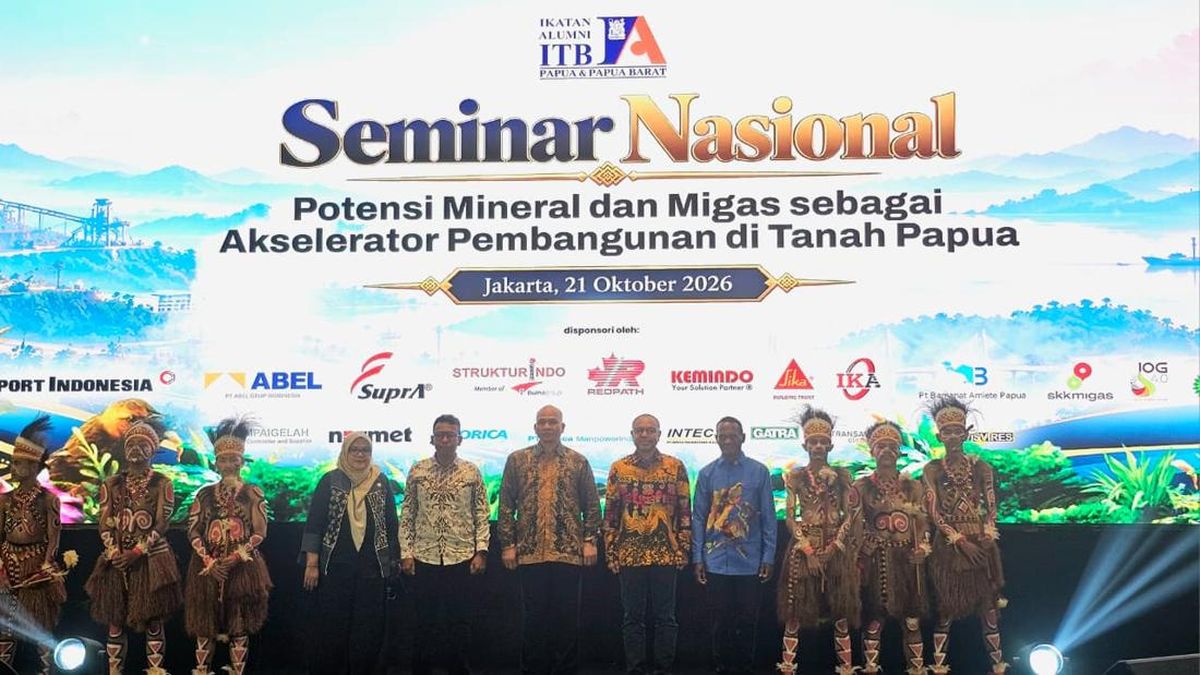
Papua’s mineral and oil and gas resources can become stronger engines of inclusive, sustainable development if investment is matched by local skills, sound governance, and broad-based economic participation, the Papua and West Papua chapter of the Bandung Institute of Technology Alumni Association said at a national seminar in Jakarta on October 21, 2026. The forum brought together central and regional officials, academics, industry representatives, and other stakeholders to examine how natural-resource wealth can generate lasting economic and social benefits.
Its central message was that development success should be measured not only by production or investment totals, but by the number of Papuans gaining opportunities to work, build businesses, and shape the region’s economic future.
As adapted from reporting by CNN Indonesia, the discussion focused on building a long-term framework for investment that links resource development with human-capital formation, regional infrastructure, public services, and environmental responsibility. The alumni association said Papua’s considerable mineral and gas potential requires careful planning, supportive policies, and sustained cooperation among government, universities, companies, customary communities, and younger generations.
Such coordination is intended to ensure that resource-led growth strengthens local economies rather than operating as an isolated industrial activity.
Turning Natural Resources Into Lasting Development
Large-scale operations such as PT Freeport Indonesia’s mining activities in Central Papua and the Tangguh gas project in West Papua have demonstrated how the extractive sector can stimulate regional economies, create employment, and support businesses connected to logistics, services, procurement, and construction. According to reports published by CNN Indonesia, participants emphasized that these examples should inform a wider strategy for responsible investment and deeper domestic value creation.
Expanding mineral processing and downstream industries within Indonesia could reinforce national supply chains while allowing Papua to capture more economic value from resources produced in the region.
Claus Wamafma, Freeport Indonesia’s director and executive vice president for sustainable development, said the value of natural resources should be judged by the tangible and durable benefits created for communities. He pointed to employment, local procurement, partnerships with micro, small, and medium-sized enterprises, stronger supplier networks, and fiscal contributions to regional and national governments as channels through which mining can support development.
He also stressed that economic objectives must be balanced with social safeguards, environmental stewardship, effective governance, and respect for local wisdom and customary rights.
The forum also addressed the practical obstacles that can limit new investment, including inadequate infrastructure, high logistics costs, energy availability, and shortages of workers with industry-relevant skills. Participants argued that stronger exploration, clearer business conditions, and policies designed for sustainable investment are necessary to unlock Papua’s potential responsibly.
Reliable, long-term investment certainty would give companies, communities, and governments a firmer basis for planning operations, training programs, infrastructure improvements, and environmental management over many years.
Building Papua’s Human Capital and Local Enterprise
Human-capital development emerged as a central condition for ensuring that Papuans participate across the full resource value chain, from exploration and production to processing and downstream manufacturing. The seminar called for expanded education, vocational training, and competency programs aligned with actual industry requirements, allowing local workers and entrepreneurs to compete for skilled positions and supply contracts.
This approach could help shift participation from short-term employment toward durable careers, locally owned enterprises, and stronger regional business ecosystems.
The alumni association further urged improvements in the financial benefits received by resource-producing regions so that public revenue can help fund infrastructure, healthcare, education, and essential services. Better coordination between central and regional authorities was presented as a way to align investment with community priorities and accelerate projects that improve connectivity and living standards.
Holding the seminar in Jakarta was itself intended to strengthen cooperation between national institutions and Papua’s regional stakeholders in support of President Prabowo Subianto’s broader development priorities.
Hengky Rumbino of the Papua and West Papua alumni chapter said long-term investment must proceed alongside stronger local capacity, more resilient regional economies, and a fairer distribution of development gains. The organization hopes the seminar’s recommendations will become practical guidance for policymakers and industry leaders managing Papua’s mineral and gas resources.
If implemented with transparency, environmental care, and meaningful community participation, the strategy could help Papua convert resource wealth into better opportunities, stronger public services, and more inclusive prosperity for future generations.
