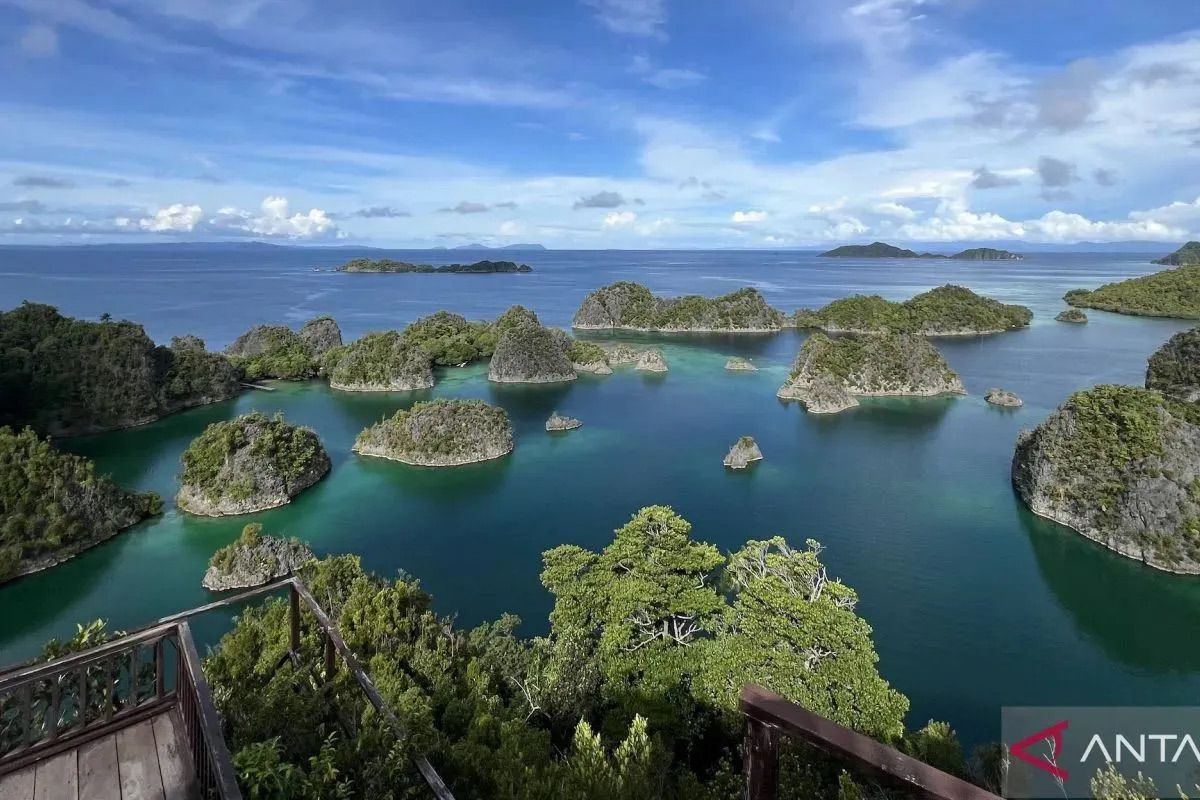
Raja Ampat is emerging as a leading example of how marine conservation can protect biodiversity while strengthening livelihoods, tourism and sustainable economic opportunities across Papua’s Bird’s Head Seascape. The approach was discussed at the Papua Gathering: From Marine Conservation to Sustainable Blue Prosperity in the Bird’s Head Seascape, held in Bali alongside the Global Marine Spatial Planning Conference and Expo.
Convened by Terra Papua and Indonesia’s Ministry of Marine Affairs and Fisheries, the forum examined how protected waters can support food security, community income and long-term regional prosperity without exhausting the ecosystems on which those benefits depend.
A Vast Marine Landscape With Shared Stakes
The Bird’s Head Seascape spans approximately 22.5 million hectares across Southwest Papua and West Papua, stretching from Cenderawasih Bay to Raja Ampat, Fakfak and Kaimana. It contains a network of 26 marine conservation areas whose ecological importance extends well beyond administrative boundaries.
Coral reefs, mangroves, seagrass beds and fisheries sustain coastal communities, strengthen local food systems and form the natural foundation for Papua’s growing marine-tourism economy.
According to reports published by kumparan, Raja Ampat demonstrates that conservation and economic activity do not have to be opposing objectives when planning, financing and enforcement are aligned. Marine tourism has created opportunities in homestays, resorts, boat operations, guided excursions, transportation and other supporting services, while environmental service fees help finance the protection and management of conservation areas.
The resulting model places local livelihoods at the center of conservation rather than treating communities as an afterthought.
Planning Development Without Sacrificing Protection
Raja Ampat Deputy Regent Mansyur Syahdan said regional development must remain focused on improving residents’ welfare. Local authorities and the Regional Development Planning Agency have mapped areas that could support blue-economy activities, although significant portions of the land remain designated as protected forest or nature reserves.
He called for national-government assistance in identifying legally appropriate spaces for development while ensuring that planning reflects community interests and the carrying capacity of the environment.
“Everything we are doing today is ultimately for the welfare of the people,” Mansyur said, emphasizing that progress must be supported by shared commitment and careful resource management. He argued that Raja Ampat’s conservation experience has already delivered tangible benefits for both marine ecosystems and household economies, but that its success cannot be taken for granted.
Coordinated decisions on tourism, coastal construction, fisheries and land use will be essential as visitor numbers and investment interest continue to grow.
Building a Responsible Blue-Economy Framework
Koswara, director general of marine management at the Ministry of Marine Affairs and Fisheries, described Raja Ampat as a valuable reference for other regions because it has developed conservation management supported by sustainable financing. He said healthy oceans are the foundation of tourism and fisheries, warning that if conservation collapses, the economic activities built on marine resources will eventually disappear as well.
His message reflects a broader policy shift in Indonesia: protected areas are increasingly viewed not only as ecological safeguards, but also as productive assets that require responsible stewardship.
The ministry is exploring innovative financing mechanisms, including a Coral Bond initiative supported by the World Bank, with Raja Ampat identified as one of its potential projects. Officials are also examining environmental insurance for tourism operators, which could encourage businesses to account for ecological risks and contribute to restoration when damage occurs.
At the same time, authorities are urging stricter standards for hotel and restaurant waste, coastal facilities and resort construction, including limits on building designs that use excessive support posts and may damage coral reefs.
Indigenous Knowledge and the Future of Papua’s Coast
West Papua Deputy Governor Mohamad Lakotami said sustainable development must open isolated areas, improve infrastructure and raise living standards while respecting indigenous rights and environmental knowledge. West Papua’s commitment is formalized through Special Regional Regulation No. 10 of 2019, which establishes a policy foundation for development that is compatible with ecological protection.
Lakotami recalled seeing fish and other marine life once abundant near his home in Kaimana become increasingly difficult to find, warning that environmental decline can deprive future generations of experiences that are now familiar only through stories.
That warning underscores why restoration and prevention must proceed together across the entire seascape. Marine ecosystems do not recognize provincial borders or the boundaries of individual conservation zones, making cooperation among national and local governments, Indigenous communities, businesses and civil-society organizations indispensable.
Sustainable infrastructure, responsible tourism and improved connectivity will deliver lasting benefits only if they are designed around local stewardship, environmental limits and equitable access to economic opportunity.
Linking Conservation, Investment and Community Prosperity
Terra Papua’s Raja Selamanya initiative is designed to strengthen lessons from Raja Ampat by connecting biodiversity protection, spatial governance, responsible resource use, sustainable finance, investment and community welfare. The initiative does not replace existing conservation systems; instead, it seeks to reinforce their foundations and promote consistency between policy and implementation.
Executive Director Meity Mongdong said national and regional policies must support one another so that conservation and blue-economy commitments are not undermined by conflicting development decisions.
The broader significance of Raja Ampat lies in its potential to offer Papua a development pathway in which nature is treated as essential infrastructure. By protecting reefs and fisheries, improving community-based tourism, strengthening planning and mobilizing new forms of finance, the Bird’s Head Seascape can generate income while preserving the ecological capital on which that income depends.
The challenge now is to turn cooperation into durable practice, ensuring that Papua’s marine wealth continues to sustain residents today and remains intact for generations to come.

