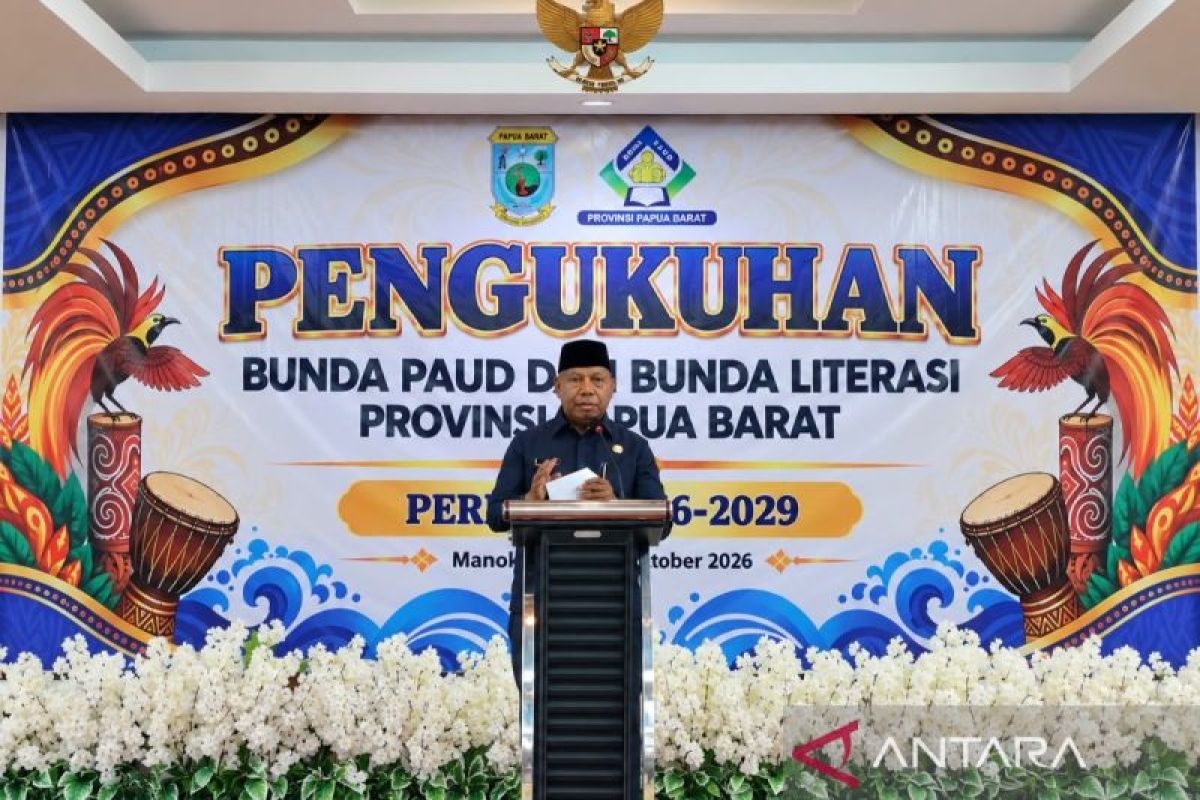
West Papua is widening access to early childhood education across remote villages, coastal settlements and interior communities, making human-capital development a central pillar of the province’s long-term progress. The initiative is designed to ensure that children receive not only classroom learning, but also health services, adequate nutrition, protection and responsive care regardless of where they live.
Governor Dominggus Mandacan said the expansion is intended to remove geographic barriers during the formative years, when physical, emotional and cognitive development can shape a child’s future prospects.
The provincial government is pursuing a holistic and integrated model that links education with public health, family support and child welfare. Under this approach, early childhood centers are expected to become gateways to broader basic services, including efforts to prevent stunting and address malnutrition, both of which can affect physical growth, school readiness and learning capacity.
The policy reflects a wider understanding that education outcomes depend on the social and health conditions surrounding children and their families.
Building Strong Foundations for Human Capital
As adapted from reporting by ANTARA News Papua Tengah, Mandacan emphasized that equitable access must be matched by better service quality so every child can grow and learn optimally. He described children as West Papua’s most important investment and said their physical development, mental well-being and character should be nurtured from an early age.
The governor’s remarks place early childhood education within a broader development strategy focused on creating a healthier, more capable and more resilient generation.
West Papua is also promoting a more welcoming transition from early childhood education into primary school. Rather than placing pressure on young children to master reading, writing and arithmetic prematurely, the transition is intended to follow their developmental stages and preserve the joy of learning.
A child-friendly start to formal education can strengthen confidence, reduce anxiety and provide a more durable foundation for future achievement, particularly for children in communities where access to educational support remains limited.
The province is giving particular attention to the connection between early learning and nutrition. Preventing stunting and tackling poor diets are being incorporated into efforts to strengthen early childhood services, recognizing that children cannot fully benefit from education when illness, hunger or developmental delays are left unaddressed.
This integrated approach can also help families identify risks earlier and connect them with local government services, creating a more coordinated safety net in geographically challenging areas.
Literacy Begins at Home and Expands Through Communities
Alongside the expansion of early childhood services, West Papua is reinforcing a province-wide literacy movement that begins inside the family. Mandacan said reading habits are formed when parents read books and tell stories to their children, then strengthened through schools, libraries and community groups.
Such an ecosystem gives children repeated opportunities to encounter language, ideas and information, while encouraging parents to participate directly in their children’s learning.
The government’s definition of literacy extends beyond the ability to read and write. It includes understanding information, thinking critically and applying knowledge to solve practical problems in everyday life—skills increasingly important for participation in the digital economy and for navigating public services.
The involvement of prospective high-school Reading Ambassadors from districts across West Papua is intended to widen youth participation and make literacy a shared social movement rather than an activity confined to classrooms.
Coordinated Action for More Inclusive Development
Officials acknowledge that the program’s success will depend on cooperation among district governments, provincial agencies, education providers, businesses, families and community organizations. The province plans to provide guidance for early childhood and literacy initiatives while strengthening coordination with district administrations, especially in places where basic services are difficult to reach.
Mandacan also recognized the commitment of early childhood teachers, whose work is essential to translating policy into daily support for children in remote and underserved communities.
By combining early education, nutrition, health, child protection and literacy, West Papua is investing in development that reaches beyond the construction of facilities or the delivery of a single service. The model places families and communities at the center while using government coordination to close gaps created by distance and uneven access.
If sustained with trained educators, reliable support and local participation, the initiative can help ensure that children from coastal, interior and isolated villages enter school healthier, more confident and better prepared to contribute to Papua’s inclusive future.