Indonesia’s military says 152 members of armed extremist groups in Papua pledged allegiance to the Indonesian state during 2026, alongside the handover of 11 organic firearms. The development marks what military leaders describe as the outcome of a human-centered security strategy designed to improve safety, public confidence and daily living conditions in remote communities.
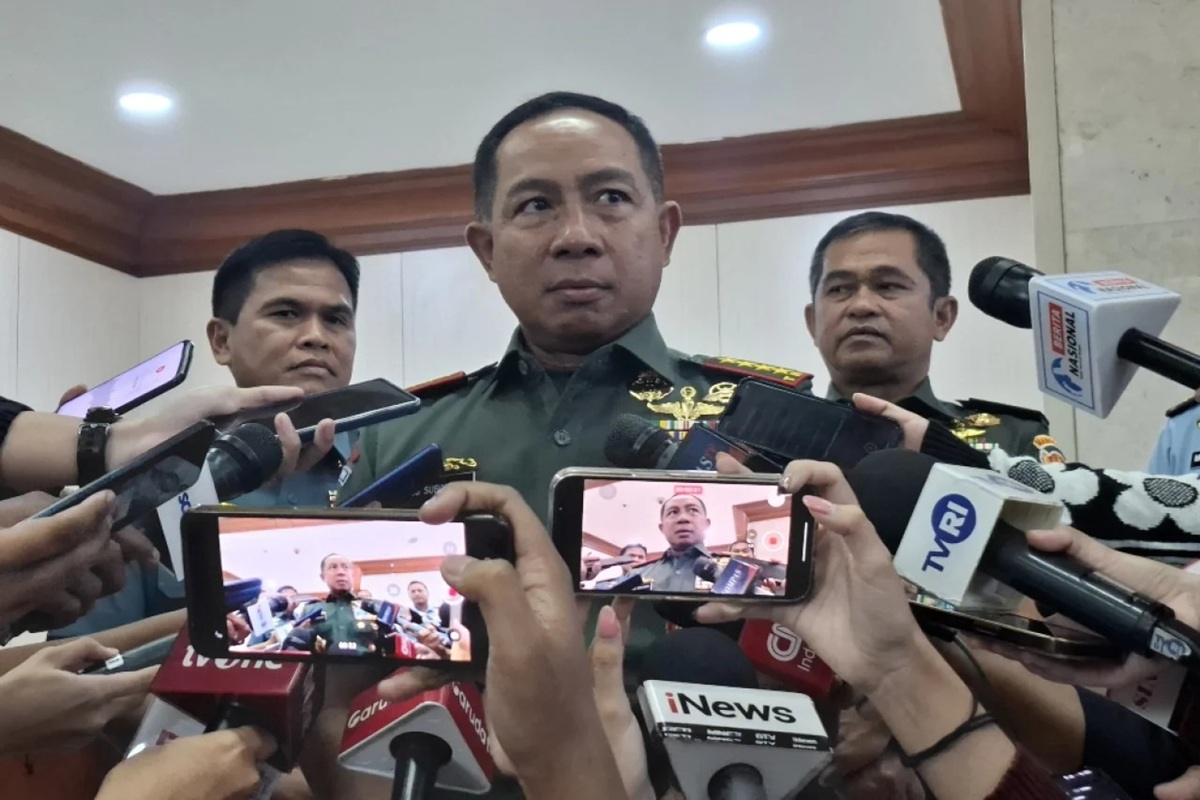
The approach combines dialogue and social assistance with infrastructure construction, livelihood support, education and basic energy access. As adapted from reporting by ANTARA News, the announcement was made by Indonesian Military Commander General Agus Subiyanto during a press briefing at the parliamentary complex in Jakarta.
For communities affected by prolonged insecurity, the policy represents an effort to connect public safety with tangible improvements in household welfare. Rather than treating security as a purely enforcement issue, the military’s territorial operations have increasingly included projects intended to strengthen local resilience and restore essential services.
These efforts are particularly significant in parts of Papua where difficult geography, limited connectivity and uneven access to public infrastructure have constrained economic opportunity. The stated objective is to create conditions in which residents can live, work, study and access services with greater confidence.
Infrastructure and Energy for Remote Communities
According to reports published by ANTARA News, the military has completed or renovated 3,334 public facilities through its territorial operations. The projects include housing, public buildings, solar-cell lighting systems, power systems and micro-hydropower plants, creating a practical foundation for more reliable community services.
In areas where grid expansion can be technically difficult and costly, decentralized renewable energy can support lighting, communications, schooling and small-scale economic activity while reducing dependence on diesel fuel.
The infrastructure program also carries a direct social dimension. Repaired homes and public facilities can provide safer spaces for families, schools and community gatherings, while improved electricity access helps extend productive hours and supports the use of digital and educational equipment.
Solar and micro-hydropower installations are especially relevant to Papua’s varied terrain, where local energy solutions can complement wider regional connectivity plans. By linking physical improvements with confidence-building, the program seeks to make development visible in communities that have historically experienced limited state services.
Livelihoods, Food Security and Human Capital
Economic assistance has been another central component of the initiative, with the military reporting that it has helped manage 345.31 hectares of land for food security. Local residents have received training in agricultural land management, while basic necessities have also been distributed to households facing hardship.
The program further includes the provision and cultivation of 238 piglets, construction of pig pens and the development of fish cages, measures aimed at supporting household income and strengthening access to locally produced food.
These activities can help diversify rural livelihoods beyond subsistence production when they are paired with technical guidance, veterinary support, reliable market access and community ownership. Livestock and fish cultivation offer opportunities for families to build productive assets, while managed agricultural land can improve local food availability and reduce vulnerability to supply disruptions.
The broader development value lies in empowering residents to manage economic resources themselves, rather than relying solely on short-term assistance. Such programs also provide a pathway for former combatants and other vulnerable residents to participate in peaceful, income-generating activities.
Education and social inclusion form a further pillar of the strategy. General Agus said the military has supported the construction of community schools and public schools, distributed thousands of school supplies, and provided clothing, toys, musical instruments and sports equipment for children.
Religious materials, including Bibles for churches, were also supplied, reflecting an effort to work through local institutions and recognize the importance of faith and community networks in Papua’s social fabric.
The reported pledges by 152 armed-group members, together with the surrender of 11 firearms, are being presented as an indication that development and reconciliation can reinforce security outcomes. General Agus said the military would continue prioritizing a humane approach but would respond firmly if armed groups carried out violence that threatened civilians.
The long-term test will be whether these initiatives produce durable trust, expanded education and healthcare access, stronger local economies and sustainable infrastructure, enabling more Papuans to choose stability and opportunity while supporting a peaceful future within Indonesia.