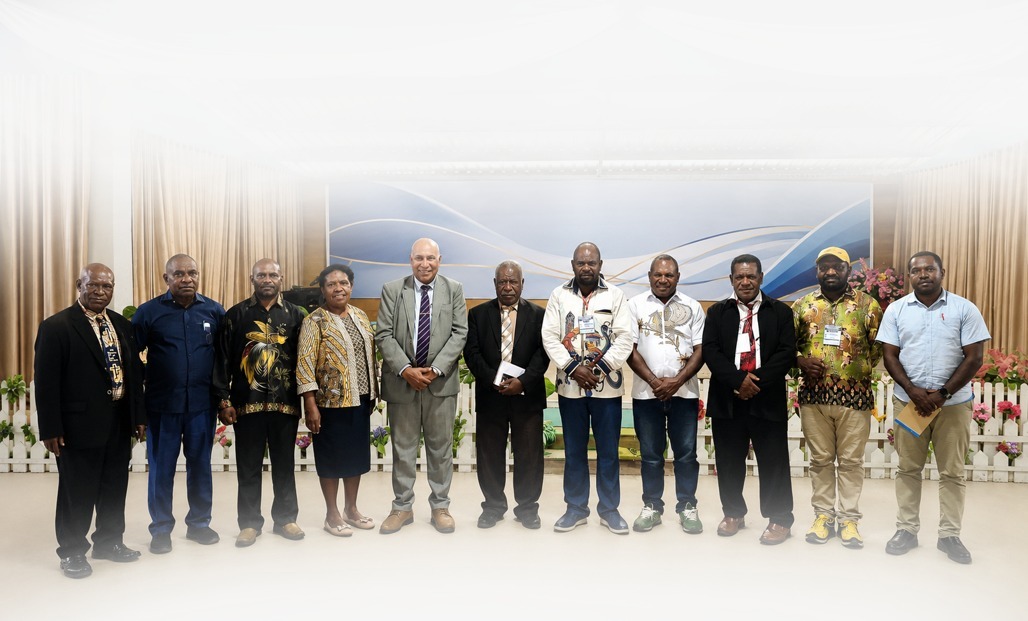
Seventeen proposed candidates have entered the selection process for chair of the Evangelical Tabernacle Church (Kingmi) in Papua for the 2026–2031 term, marking a significant phase in the church’s regional leadership transition. The selection committee is now allowing nominees to complete or correct their documents before administrative verification, competency assessments and possible interviews.
The final decision is scheduled to be made at the Kingmi Synod’s 12th conference in Manokwari, West Papua, from Nov. 16 to 21, 2026.
The process brings together church structures extending across Papua, where Kingmi has 93 definitive classes and 11 preparatory classes. These units are represented through 13 definitive coordinators and one preparatory coordinator, creating a broad consultative framework for identifying prospective leaders.
Beyond determining who will serve as chair, the process is an institutional exercise in accountability, representation and continuity for a church whose local congregations operate across geographically challenging parts of eastern Indonesia.
A Structured and Inclusive Selection Process
As adapted from reporting by ODIYAIWUU, the current list consists of proposed candidates rather than an officially confirmed ballot. The names submitted to the selection committee are the Reverend Marthen Keiya, Reverend Ayub Yogi, Reverend Yahya Lagowan, Reverend Yusak Pekei, Reverend Nataniel Tabuni, Reverend Yahirus Elopore and Reverend Deserius Adii.
It also includes Reverend Menni Yogi, Reverend Marthen Mauri, Reverend Henokh Nawipa, Reverend Lambert Pase, Reverend Menater Labene, Reverend Frediel Pigai, Reverend Warius Enumbi, Reverend Markus Kilunga, Reverend Selfianus Bolhuy and Reverend Dr. Yulian Anouw.
According to reports published by ODIYAIWUU, the names emerged through a layered nomination mechanism beginning at the class level and moving through the coordinating bodies. Each class proposes two prospective candidates, after which coordinators conduct a further review before forwarding names to the selection committee.
The arrangement is designed to ensure that nominations are rooted in local church structures while also passing through a wider regional process before formal scrutiny.
Selection committee secretary Apedius I. Mote said nominees and coordinators had been given time to review their submissions and repair incomplete documentation.
The correction period was scheduled for Oct. 19–21, followed by the submission of revised documents on Oct. 22–23 at the committee secretariat at Walter Post Theological Seminary in Jayapura’s Pos 7 Sentani area. Mote urged all participants to follow the timetable closely and submit their corrected files through the official channel.
Leadership, Human Capital and Community Service
Once the document-repair stage is completed, the committee will verify each nominee’s administrative eligibility before moving to the next phases. These are expected to include a suitability assessment, presentations of leadership vision and mission, and interviews if required.
Such stages provide an opportunity to assess not only formal qualifications but also candidates’ preparedness to guide pastoral work, strengthen institutional management and respond to the practical needs of congregations across Papua.
The leadership contest also highlights the importance of theological education and professional capacity in Papua’s long-term social development. Several nominees hold advanced theological degrees, while others bring training in education and ministry administration, reflecting the range of expertise being considered for the synod’s next period.
Institutions such as Walter Post Theological Seminary are therefore relevant not only as venues for the selection process but also as part of the human-capital infrastructure supporting church leadership and community service.
The selection committee has called on congregations, coordinators, synod officials, the seminary and all supporting parties to preserve unity and respect every stage of the process. It has also asked church members to pray for an orderly and constructive selection and conference, while encouraging participants to rely on official information issued by the committee.
With the Manokwari conference approaching, the process offers Kingmi an opportunity to reinforce transparent governance, nurture capable leadership and sustain its contribution to communities throughout Papua and West Papua.