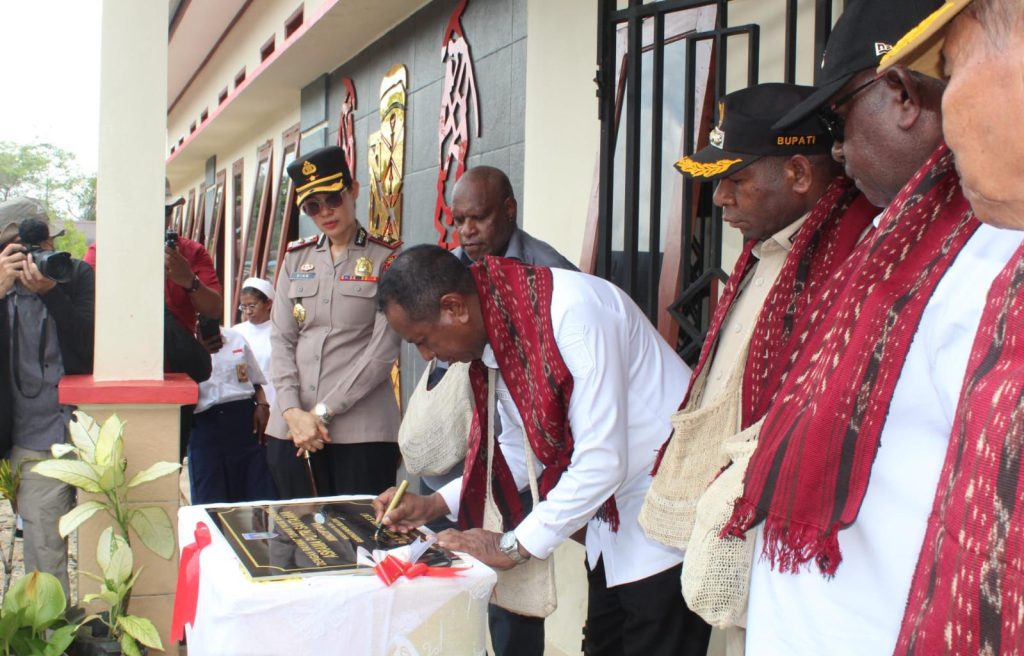
The South Papua provincial government is intensifying efforts to expand access to education, positioning learning as a central pillar of social and economic development across the country’s newest and most geographically dispersed regions. The initiative seeks to ensure that children and young people can reach schools and obtain meaningful educational opportunities despite distance, infrastructure constraints and uneven access to public services.
According to reporting published by InfoPublik, the provincial administration is making education access a priority as South Papua builds the foundations of a more inclusive regional future.
Improving access to education is particularly significant in a region where communities are spread across wide areas and where travel can be shaped by rivers, wetlands, forests and long distances between population centers. In such circumstances, the question is not only whether schools exist, but whether students can attend regularly, teachers can reach their classrooms and families can obtain the support needed to keep children in education.
By elevating access as a development priority, South Papua is addressing one of the most important conditions for reducing inequality and strengthening household resilience.
Building the Foundations of Human Capital
As adapted from reporting by InfoPublik, the provincial government’s education push reflects a broader effort to improve public services in South Papua through long-term investment in human capital. The available report does not provide detailed figures on enrollment, school construction or the number of beneficiaries, but its central message is clear: expanding educational opportunity is being treated as an essential responsibility of regional governance.
That approach aligns education policy with the province’s wider need to prepare a skilled, confident and locally rooted generation.
For students in remote and underserved communities, better access can transform everyday prospects. Regular schooling can improve literacy, numeracy and digital awareness while creating pathways toward vocational training, higher education and employment in sectors relevant to South Papua’s future. It can also strengthen civic participation, public health awareness and the ability of young people to contribute to decisions affecting their families and communities.
Connecting Communities Through Opportunity
Education access is closely tied to the quality of regional connectivity. Roads, bridges, river transport, communications networks and reliable public facilities all influence whether students can attend school and whether teachers and learning materials can reach them. In this sense, the provincial initiative forms part of a wider development picture in which social infrastructure and physical infrastructure must advance together, particularly in remote districts.
A sustained focus on access can also support more inclusive economic growth. When children from rural, coastal and Indigenous communities are able to remain in school, the benefits extend beyond individual achievement to local labor markets, household incomes and the capacity of communities to manage natural resources responsibly.
Education can help young people participate in emerging opportunities without severing their connection to local culture, knowledge and place.
The next stage will require consistent implementation, transparent monitoring and close cooperation among provincial authorities, district governments, schools, teachers, families and community leaders. Expanding access should be accompanied by attention to teaching quality, safe learning environments, adequate staffing, learning materials and support for students facing financial or geographic barriers.
These practical elements will determine whether the policy becomes a durable improvement in educational outcomes rather than a short-term administrative commitment.
South Papua’s focus on education access therefore carries significance well beyond the classroom. It represents an investment in the capabilities that will underpin healthier communities, stronger local economies and more balanced development across the province.
As the region continues to build its institutions and public services, ensuring that every child has a realistic route to education will remain one of the clearest measures of sustainable and inclusive progress.
