West Papua is pursuing a broader national market for locally made goods by helping micro, small and medium-sized enterprises improve quality, obtain certification, adopt digital marketing and secure business financing. The provincial government is positioning the effort as a foundation for inclusive economic growth, with a focus on sectors ranging from fisheries and agriculture to creative industries and food processing.
Led by Governor Dominggus Mandacan and supported through a local trade exhibition in Manokwari, the initiative is designed to connect Indigenous Papuan entrepreneurs with consumers, banks and potential commercial partners.
Turning Local Potential Into Market Strength
According to reports published by ANTARA News Papua Tengah, Mandacan said the expansion of local trade must move together with stronger empowerment for small businesses. He argued that products need to be improved and made more consistent if producers are to meet the expectations of customers beyond West Papua.
That approach places product development, business mentoring and market access at the center of a wider strategy to convert the province’s natural and cultural assets into dependable sources of household income.
West Papua’s economic potential extends across marine and fisheries production, farming, plantations and processed foods, all of which can generate greater value when products are packaged, branded and marketed more effectively. The province also has opportunities in handicrafts, batik, traditional arts and other goods rooted in local knowledge and cultural identity.
These sectors can support an expanding creative economy while giving communities a way to preserve distinctive traditions through commercially viable enterprises.
Mandacan said business assistance combined with certification would strengthen the competitiveness of West Papuan products in both national and international markets. Certification can help producers meet buyer requirements, improve consumer confidence and create a clearer route into formal supply chains.
For small enterprises that have traditionally relied on limited local networks, these improvements can transform a product from a community specialty into a market-ready commodity without severing its connection to local identity.
Building Digital and Financial Access
The provincial government is also concentrating on digital capabilities, recognizing that online platforms can help businesses reach customers far beyond their immediate surroundings. Training in digital promotion and sales can give producers new tools to display product quality, tell the story behind local goods and maintain direct relationships with consumers.
In a geographically challenging region, wider use of digital commerce could reduce dependence on physical promotion alone and make it easier for enterprises to test demand in new markets.
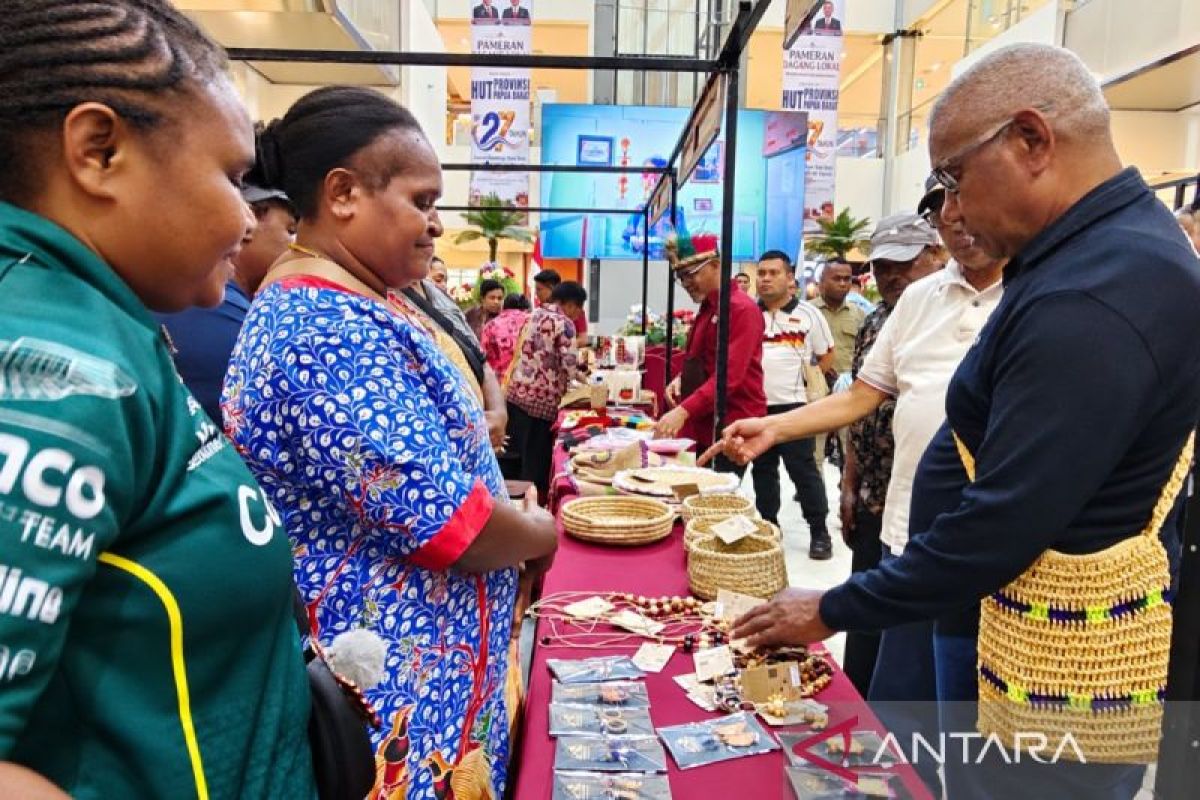
The trade exhibition, organized by the West Papua Industry and Trade Agency, served as a practical meeting point between entrepreneurs, consumers, banking institutions and prospective business partners. Rather than functioning only as a promotional event, it was presented as part of a broader downstream-processing program intended to increase the value of local products, widen access to working capital and encourage future business development.
Direct engagement with buyers and financiers can help enterprises better understand market expectations while opening opportunities for partnerships, investment and improved production capacity.
Expanding Opportunities for Indigenous Entrepreneurs
Agency head Bondan Santoso said 27 Indigenous Papuan business operators took part in the exhibition, giving them an opportunity to introduce their products to consumers after facing longstanding limitations in promotion. Their participation highlights the importance of ensuring that economic expansion reaches the communities whose resources, skills and cultural knowledge underpin many of West Papua’s distinctive products.
By bringing these producers into a shared commercial space, the government is helping them build visibility, receive feedback and strengthen networks that may support future growth.
The initiative reflects a shift from simply producing goods toward developing complete, competitive enterprises capable of reaching larger markets. Quality control, certification, attractive packaging, recognizable branding, online promotion and access to capital are mutually reinforcing elements of that transition.
As adapted from reporting by ANTARA News Papua Tengah, the governor urged exhibitors to demonstrate the quality and creativity of their products while using conversations with visitors to expand their business connections.
West Papua’s market strategy ultimately links economic development with human-capital empowerment: entrepreneurs are being encouraged not only to sell, but also to learn, innovate and participate in more formal commercial systems. If mentoring and financing support continue alongside digital training and certification, local businesses could increase their resilience, create employment and retain more value within the province.
The effort offers a constructive model for inclusive regional development, in which national and international market ambitions are built on Indigenous enterprise, sustainable local production and the distinctive cultural strengths of Papua.