West Papua will allocate Rp80 billion in Special Autonomy funds to sustain and expand its Smart West Papua education program in 2026, strengthening support for Indigenous Papuan students from secondary school through doctoral and medical education. The allocation represents a substantial increase from the Rp50 billion provided in 2025 and positions education as a central pillar of the province’s long-term human capital strategy.
The initiative is designed to widen access to learning, improve educational quality and prepare more locally rooted professionals to contribute to the province’s development.
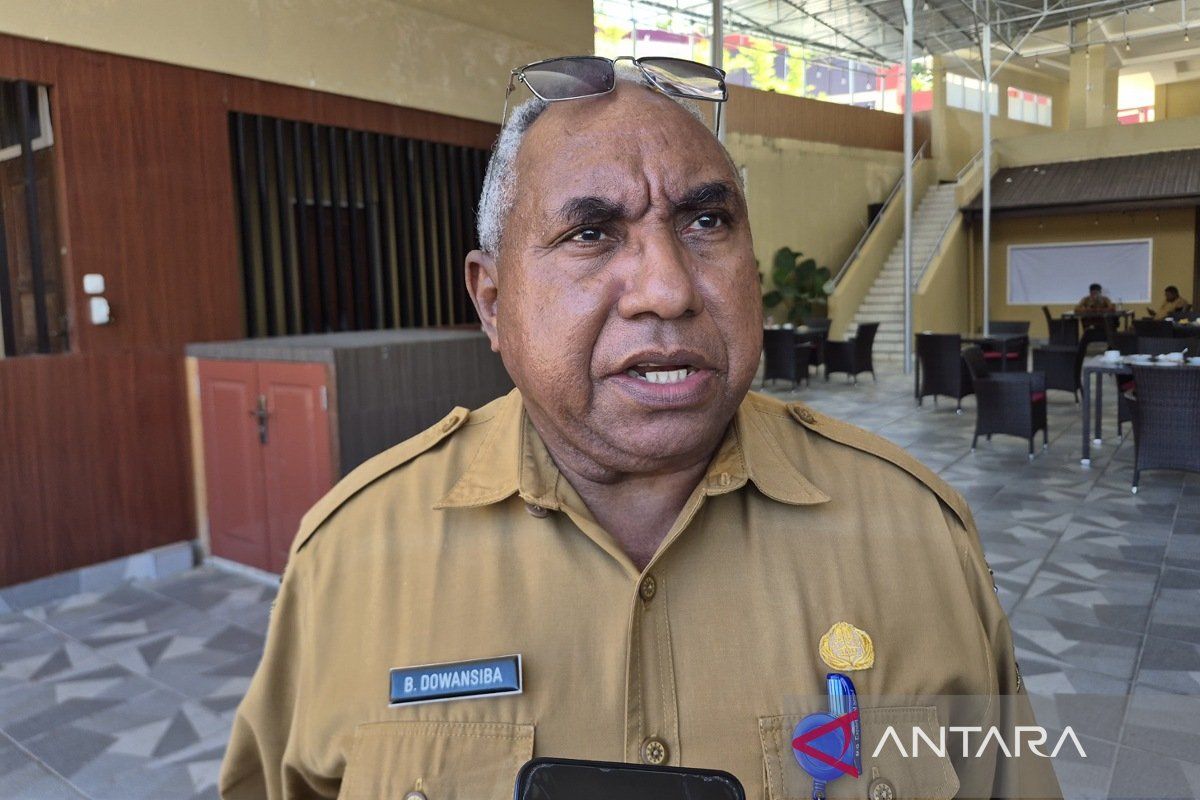
According to reports published by ANTARA News Papua Tengah, West Papua Education Agency chief Barnabas Dowansiba said the program would provide secondary-school assistance and scholarships for bachelor’s, master’s, doctoral and medical students. Because the funding comes from the Special Autonomy allocation, eligibility is reserved for Indigenous Papuan children, including students enrolled in senior high schools, vocational schools and universities.
The policy links public investment directly to the province’s constitutional and development commitments to ensure that economic progress produces lasting benefits for Papuan communities.
Building a Stronger Education Pipeline
Demand for the program is already significant. Applications for bachelor’s-level scholarships have reached 1,950, while 70 prospective medical students have registered; all supporting documents will first undergo verification by the regional inspectorate. This screening process is intended to strengthen accountability, confirm eligibility and ensure that public funds reach qualified recipients through a transparent administrative framework.
Under the planned structure, each bachelor’s scholarship recipient will receive Rp10 million per year, while medical students will receive Rp100 million. Medical scholarship recipients will be required to serve in West Papua after completing their training, creating a direct pathway between educational investment and future healthcare capacity in the province.
The service requirement could help address the long-term need for more locally trained doctors while ensuring that publicly funded expertise is returned to the communities that helped finance it.
Investing in Schools and Local Opportunity
The program also reaches students before university, recognizing that a sustainable education system must support learners at multiple stages. Secondary-school assistance will be delivered through two schemes: achievement scholarships worth Rp2.6875 million per student for Grade 11 and Grade 12 students, and uniform assistance worth Rp3 million for each Grade 10 student.
By helping cover both merit-based education costs and basic school requirements, the scheme can reduce financial pressures that often affect attendance, participation and continuation into higher education.
In the coming weeks, the provincial government will meet with the heads of senior and vocational high schools across West Papua to determine the number of students who will receive scholarships in 2026 across seven regencies. School leaders are expected to bring core education data, records of high-performing students and verified information on Indigenous Papuan learners.
This data-driven coordination can improve targeting while giving schools a more active role in identifying students whose potential may otherwise be overlooked.
Applications for bachelor’s and medical scholarships have closed and are now being reviewed, while eligible master’s and doctoral applicants remain part of the program’s broader scholarship framework. As adapted from reporting by ANTARA News Papua Tengah, the province’s approach combines increased funding, administrative verification and a post-graduation service obligation, reflecting an effort to make education spending both inclusive and strategically focused.
Rather than treating scholarships as isolated assistance, West Papua is shaping them as part of a regional development pipeline that connects classrooms, professional training and public service.
The 2026 expansion offers a measurable signal of how Special Autonomy resources can be directed toward opportunity and institutional capacity. More supported students could mean a deeper pool of teachers, health professionals, researchers, administrators and skilled workers able to participate in West Papua’s future economy.
If implemented with consistent oversight and timely disbursement, the Smart West Papua program can help turn educational access into broader social mobility and more resilient, community-led development across the province.