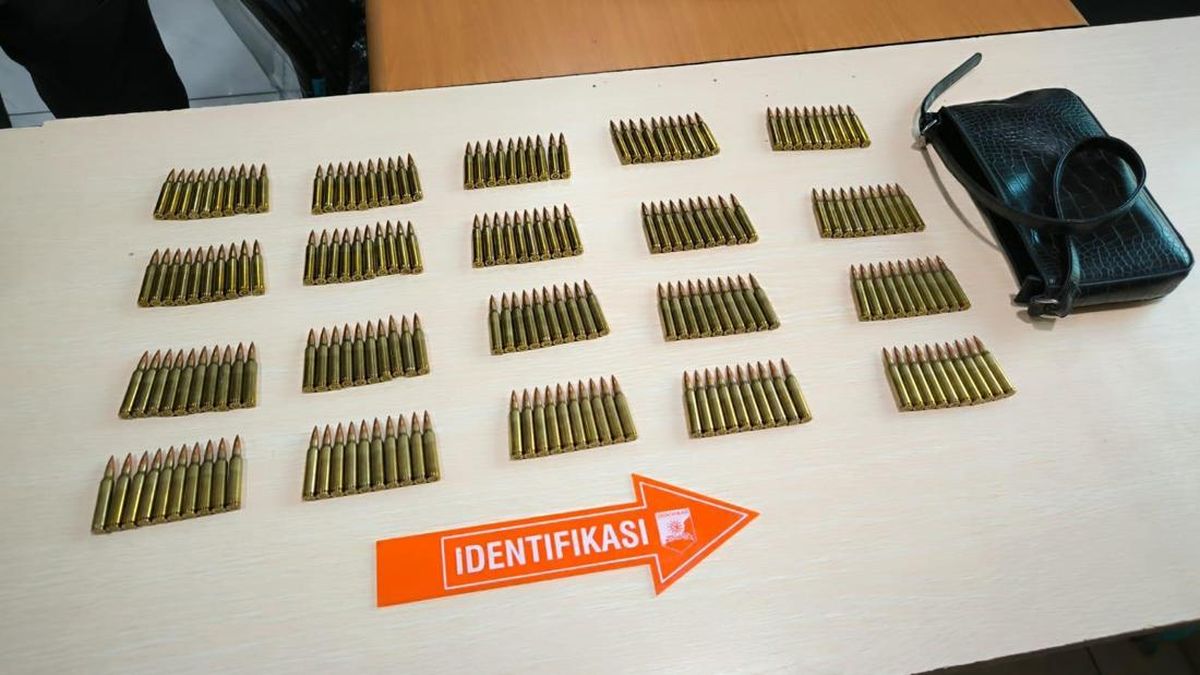
Indonesian customs officials and police have foiled an attempted shipment of 200 rounds of 5.56-millimeter ammunition and 340 packages of illicit cigarettes in the waters off Jayapura, Papua, authorities said. The suspected cargo was allegedly being transported by longboat toward Papua New Guinea when officers moved to inspect the vessel late on October 3.
The interception prevented the ammunition from continuing through a sensitive maritime corridor and placed the case under formal police investigation. The operation also underscored the role of community information and coordinated enforcement in protecting border communities and legitimate cross-border commerce.
According to reports published by detikNews, the action began after residents alerted authorities to a longboat believed to be carrying illegal goods toward Papua New Guinea. The vessel reportedly attempted to evade inspection, with crew members throwing several items into the sea as officers approached.
A subsequent sweep of the surrounding waters led officials to recover the ammunition and illicit cigarettes. The incident illustrates how local knowledge can strengthen maritime surveillance, particularly across routes where small boats and informal movements can complicate routine monitoring.
Coordinated Enforcement Along a Strategic Border
The operation involved the Jayapura Customs and Excise Supervision and Service Office and Indonesian police personnel. Fungki Awaludin, head of the Jayapura customs office, said illicit cigarettes fell directly within the agency’s enforcement mandate, while the ammunition was transferred to Papua Regional Police for deeper criminal investigation.
Customs officials handed over the 200 rounds on October 5 through the police unit supporting the Damai Cartenz Peace Operation and the Directorate of General Criminal Investigation. The transfer established a clear chain of custody as investigators began determining how the ammunition entered the supply network.
Police Commissioner Yusuf Sutejo said investigators were examining the ammunition’s origin, the identity of those who arranged its shipment and its intended destination. Officials are also expected to question a number of witnesses as they reconstruct the route and identify individuals involved.
Authorities have not publicly attributed the ammunition to a particular organization, and the investigation remains open. Maintaining that evidentiary discipline is essential in a case involving potentially dangerous material and a cross-border destination.
Protecting Lawful Trade and Community Security
Although the seizure is primarily a security and customs matter, its wider significance reaches into Papua’s economic development agenda. Jayapura sits near a major international boundary, where regulated movement of people and goods is important to local livelihoods, regional supply chains and Indonesia’s relationship with Papua New Guinea.
Preventing ammunition trafficking helps reduce the risk that maritime trade routes will be exploited for violence or intimidation. At the same time, action against illicit cigarettes protects compliant businesses from unfair competition and supports the integrity of public revenues.
The recovery also demonstrates why border security cannot depend solely on large facilities or distant command centers. Residents who recognize unusual activity, customs officers who understand local waters and police investigators who can trace evidence all form part of a practical security network.
Such cooperation can make enforcement more responsive while strengthening public confidence that reports from coastal communities receive attention. It also creates a safer environment for fishermen, transport operators and small traders who depend on predictable maritime access.
Governance That Supports Sustainable Regional Growth
For Papua, stronger oversight of border corridors is closely connected to the broader goal of inclusive and sustainable development. Infrastructure, education, healthcare and investment can deliver lasting benefits only when communities are secure and legal economic activity is protected.
Effective customs work helps distinguish legitimate cross-border commerce from trafficking, allowing authorities to facilitate lawful movement while focusing investigative resources on high-risk cargo. In this sense, the Jayapura seizure represents not only an enforcement result but also a measure of institutional capacity in a strategically important region.
As adapted from reporting by detikNews, the case now moves beyond the initial interception toward a more detailed examination of supply chains, financing and cross-border contacts. The outcome will depend on evidence gathered by investigators and the accountability of those ultimately identified as responsible.
Continued cooperation between residents, customs officials and police can help prevent similar shipments while preserving the open, lawful connections that support communities on both sides of the border. For Papua’s future, secure maritime routes and trusted public institutions remain foundations for resilient regional growth.