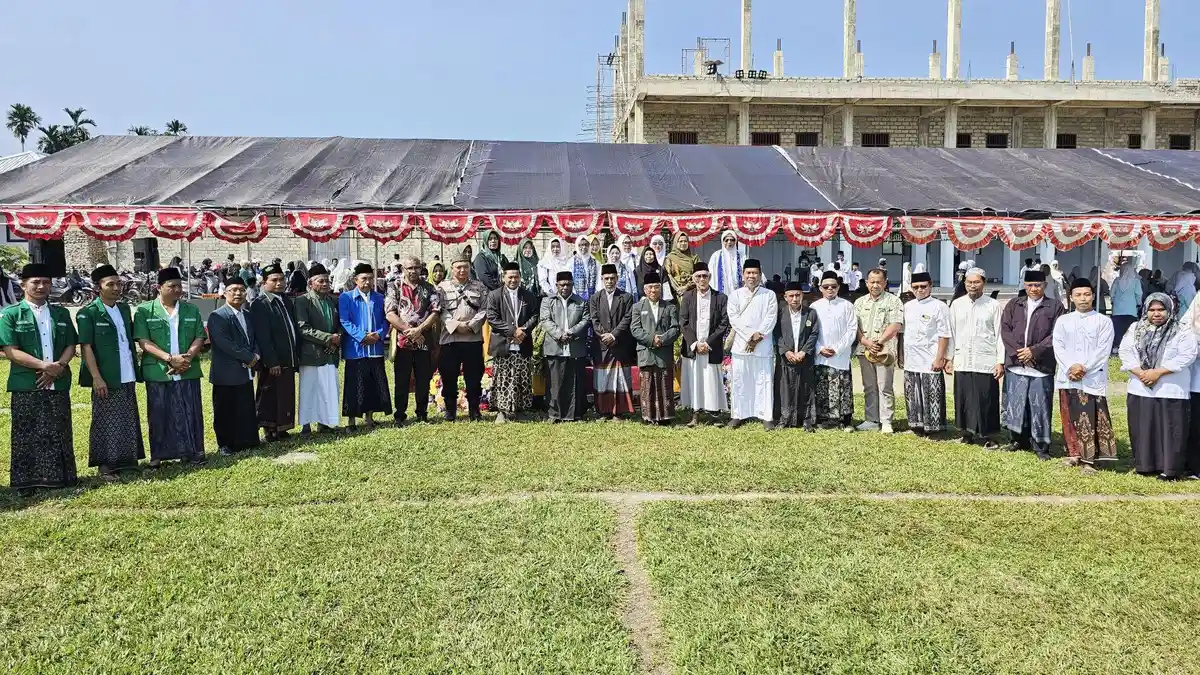
Mimika Regency in Indonesia’s Central Papua province is positioning its ethnic, cultural, religious and social diversity as a foundation for peaceful and inclusive development. At a forum in Timika, local officials urged nearly 200 civil servants to protect social harmony, resist misinformation and place dialogue at the center of resolving community disputes.
The message reflects a broader development priority: infrastructure, public services and economic opportunity can advance sustainably only when communities share a commitment to stability and mutual respect.
According to reports published by ANTARA News Papua Tengah, Mimika government officials described the regency as an area with substantial development potential and a highly diverse population. Ananias Faot, assistant for government and public welfare affairs at the Mimika Regional Secretariat, said differences should be understood as a source of collective strength rather than a reason for division.
His remarks came during a focus group discussion on strengthening civic and national-defense awareness among civil servants, linking professional service with the wider responsibility of safeguarding the public interest.
Social Cohesion as Development Infrastructure
Faot called on residents to regard Mimika as a shared home and warned that misunderstandings, competing interests and unverified information could trigger conflict that harms communities and delays development. In regions experiencing rapid economic and demographic change, public trust is an essential form of social infrastructure: it enables government programs to reach residents, encourages cooperation and reduces the risk that local tensions will undermine long-term investment.
The approach also recognizes that development is not measured solely by physical construction, but by whether people can participate in progress safely and confidently.
The civil servants attending the forum were encouraged to become visible examples of unity, guardians of social harmony and agents of peace in their respective workplaces and neighborhoods. Faot urged participants to respond to disputes through dialogue, respect customary values that are consistent with national law and use legitimate resolution mechanisms.
He also cautioned them not to be easily provoked or to circulate information that could inflame tensions, placing responsible communication alongside administrative competence as a core public-service duty.
Building Human Capital Through Public Service
The forum was organized by Mimika’s Agency for National Unity and Politics under the theme of civil servants’ professional service as a form of civic contribution. That framing expands the meaning of human-capital development: public employees are not only administrators, but also trusted intermediaries between government institutions and diverse communities.
By strengthening their ethical judgment, communication skills and understanding of local social dynamics, the program seeks to improve the quality and resilience of governance across the regency.
The agency is conducting national-defense awareness development on an ongoing basis and maintaining coordination with the Indonesian military and police, religious leaders, youth representatives, educational institutions, youth organizations and other elements of civil society. Such cross-sector cooperation can help connect public policy with local knowledge, customary leadership and community-based problem-solving.
It also creates a platform for early dialogue when social concerns emerge, supporting a more preventive and inclusive approach to public security and regional planning.
Faot emphasized that development cannot reach its full potential when communities are trapped in conflict and division. For Mimika, the commitment to national service therefore extends beyond formal ceremonies or institutional programs; it is intended to become part of everyday civic character and a practical condition for economic and social advancement.
If maintained consistently, the initiative can help ensure that the regency’s diversity strengthens education, public services, local enterprise and future infrastructure efforts rather than becoming a source of fragmentation.
Mimika’s experience offers a wider lesson for Papua’s development trajectory: lasting progress depends on both material investment and the relationships that sustain it. By asking civil servants to model respect, verify information and resolve disagreements lawfully, the regional government is investing in the human foundations of inclusive growth.
As adapted from reporting by ANTARA News Papua Tengah, the forum’s central message is clear—diversity is not an obstacle to development, but a shared resource that can help build a more peaceful, capable and resilient Mimika.