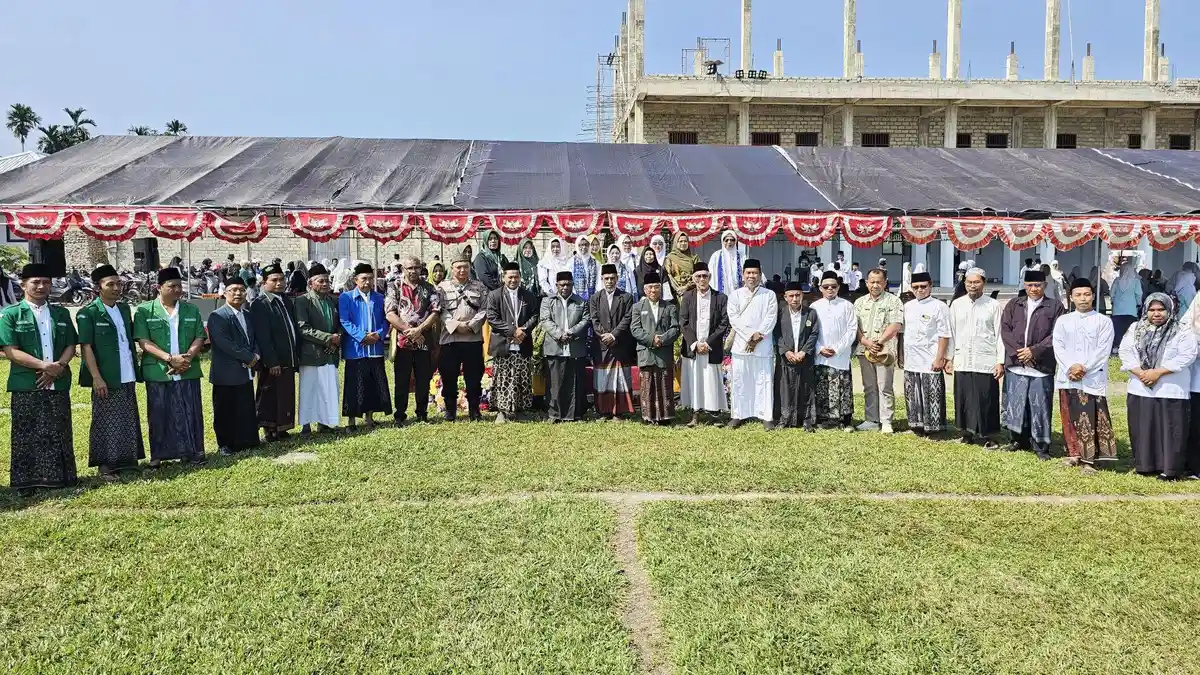
West Papua used the 2026 National Santri Day commemoration to position Islamic boarding-school students as important contributors to human-capital development, technological advancement and religious harmony across the province. The ceremony was held on Thursday, Oct. 22, at the Futuhiyah Islamic boarding school field in Aimasi Village, SP 3, with Barnabas Dowansiba, acting head of the West Papua Regional Office of the Ministry of Religious Affairs, serving as inspector.
The gathering placed education and character formation at the center of a broader development agenda for a diverse and rapidly changing region. It also called on students to translate faith, learning and civic responsibility into practical service for their communities.
Dowansiba delivered a message from Indonesia’s Minister of Religious Affairs, Nasaruddin Umar, urging santri to respond confidently to the challenges of the modern era. The minister described them as potential pioneers of science and technology, guardians of social cohesion, drivers of economic self-reliance and partners in protecting the environment.
His appeal reflects a national understanding that religious education can complement digital skills, entrepreneurship, scientific literacy and responsible citizenship. In West Papua, where communities are separated by geography and shaped by many cultures, those capabilities can strengthen both social resilience and inclusive growth.
Education as a Foundation for Regional Transformation
According to reports published by klikpapua, the ceremony emphasized that National Santri Day is not exclusively an Islamic observance but a national moment honoring struggle, unity and collective service. The message encouraged Indonesians to preserve the spirit of mutual assistance while carrying forward the contributions of religious scholars and national heroes in ways suited to contemporary needs.
For Papua Barat, that means ensuring that education produces graduates who are not only grounded in religious knowledge but also prepared to participate in public life, local enterprise and the knowledge economy. Such an approach supports a development model in which human resources are treated as the foundation of lasting progress.
Dowansiba urged santri to broaden their horizons and master science and technology without abandoning religious values as a moral compass. Digital competence can open pathways to distance learning, online commerce, creative industries, public information and new forms of collaboration, especially for young people living far from major urban centers.
When combined with discipline, ethical judgment and community awareness, those skills can help boarding-school graduates become agents of practical change rather than passive recipients of development programs. The emphasis is particularly relevant as Papua’s connectivity improves and local institutions seek to ensure that technological expansion benefits communities fairly and responsibly.
Building Harmony Across a Diverse Papua Barat
The provincial religious affairs leader also called on santri to become ambassadors of religious moderation and peaceful coexistence in a society comprising numerous ethnic groups, languages, cultural traditions and faiths. He said students should protect unity, set an example in everyday community life and express religious values in ways that bring calm and benefit to others.
This vision places pesantren at the intersection of education, social trust and local development, giving them a role beyond classroom instruction and worship. By nurturing dialogue and respect, they can help reduce social divisions and create the stable environment required for investment, education and public services to take root.
Dowansiba further described Islamic boarding schools as strategic institutions for forming a generation that is spiritually strong, broad-minded, independent and ready for the future. Their contribution can extend from character education to vocational preparation, environmental awareness, community outreach and support for locally driven economic initiatives.
The National Santri Day message therefore links personal advancement with public responsibility: students are encouraged to keep learning, create useful work and serve society while helping build a peaceful and prosperous West Papua. As adapted from reporting by klikpapua, the commemoration offered a positive development blueprint in which technology, moral leadership, interfaith harmony and education reinforce one another across the province.

