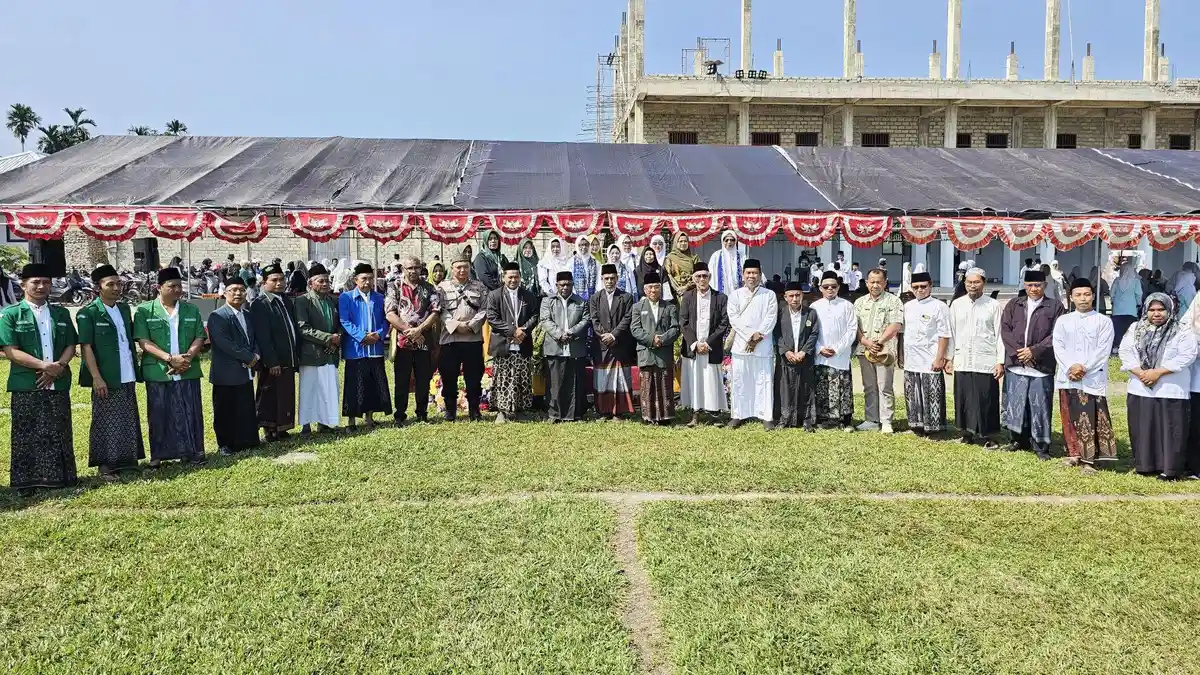
Sorong Regency in Southwest Papua has launched a cross-sector nutrition initiative to prevent and accelerate the reduction of childhood stunting, bringing together the local government, Bank Papua and the provincial Population and Family Planning Agency. The Sahabat Genting, or Foster Parents’ Movement to Prevent Stunting, is designed to support pregnant women, breastfeeding mothers, women recovering after childbirth, infants, toddlers and families facing nutritional vulnerability.
The program combines public health action with business participation, recognizing that early nutrition is central to children’s development, educational readiness and future productivity. It was introduced in Aimas as part of a broader effort to make human-capital development a shared responsibility across government, families, health workers, communities and the private sector.
Stunting remains more than a medical concern because its effects can extend across a child’s entire life cycle. Inadequate nutrition during pregnancy and the first years of life can hinder physical growth, cognitive development and learning outcomes, while also weakening the foundation for a productive workforce in later years.
Sorong officials therefore describe prevention as a development priority requiring sustained cooperation rather than isolated interventions. By linking nutritional assistance with family support and community awareness, the initiative seeks to address immediate dietary needs while strengthening public understanding of maternal and child health.
A Coordinated Investment in Early Nutrition
As adapted from reporting by ANTARA News Papua Tengah, Sorong Regent’s senior adviser for human resources, Nico Salosa, said the scale of the challenge required the involvement of government, businesses, health professionals, communities and families. The launch included the distribution of nutritional assistance consisting of eggs and milk to pregnant women, breastfeeding mothers and women in the postpartum period.
These supplies are intended to help meet nutritional requirements for mothers and support healthy growth from the earliest stages of a child’s life. The practical focus on protein-rich food also gives the program a direct and visible impact for households that may struggle to maintain a balanced diet.
The initiative is being implemented with Bank Papua and the Southwest Papua representative office of the national Population and Family Planning Agency, alongside Sorong’s Office for Population Control, Family Planning, Women’s Empowerment and Child Protection. This institutional structure reflects the multiple dimensions of stunting prevention, which include maternal care, infant feeding, family planning, health monitoring and social protection.
Officials say the program will prioritize families requiring assistance with nutrition and improved health, creating a pathway for support to reach households during pregnancy and the critical early-childhood period. Such coordination can also help reduce gaps between policy commitments and the daily realities experienced by families in geographically dispersed communities.
Business Participation Expands the Development Effort
Ferry Fatem, head of Sorong’s population control and family planning office, said faster progress against stunting depends on collaboration across sectors because the issue affects not only health but also children’s development, education quality and long-term productivity. He emphasized that corporate social responsibility programs can broaden assistance for families at risk, adding resources and institutional capacity to public programs.
Bank Papua representative Rowi Yus LY Dato reaffirmed the bank’s commitment to improving community health through corporate social responsibility and supporting efforts to reduce stunting across Papua. The partnership demonstrates how regional financial institutions can contribute to social infrastructure alongside their economic role.
Provincial figures for the first half of 2026 show that the broader Genting program in Southwest Papua had reached 697 families at risk of stunting against a target of 1,292 households, representing approximately 55.2 percent coverage. The figure indicates meaningful early implementation while also showing the scale of the remaining task, particularly as authorities seek to reach more than 500 additional families within the stated target.
Continued monitoring will be important to ensure that food assistance is paired with health guidance, regular growth checks and appropriate referrals when families require further support. Expanding coverage through trusted local institutions, health workers and community networks could make the program more consistent and responsive across the region.
Beyond the immediate delivery of eggs and milk, Sahabat Genting offers a model for inclusive development in Papua by placing families at the center of a coordinated public-private effort. Its intended outcome is not simply a reduction in stunting statistics, but the emergence of a healthier, more capable generation able to benefit from education and participate fully in the regional economy.
Stronger maternal and child nutrition can reinforce other development investments, from schools and health facilities to workforce training and local enterprise. As the program advances, deeper community engagement, reliable data and sustained corporate participation will be essential to turning this launch into lasting gains for children and families throughout Sorong and Southwest Papua.