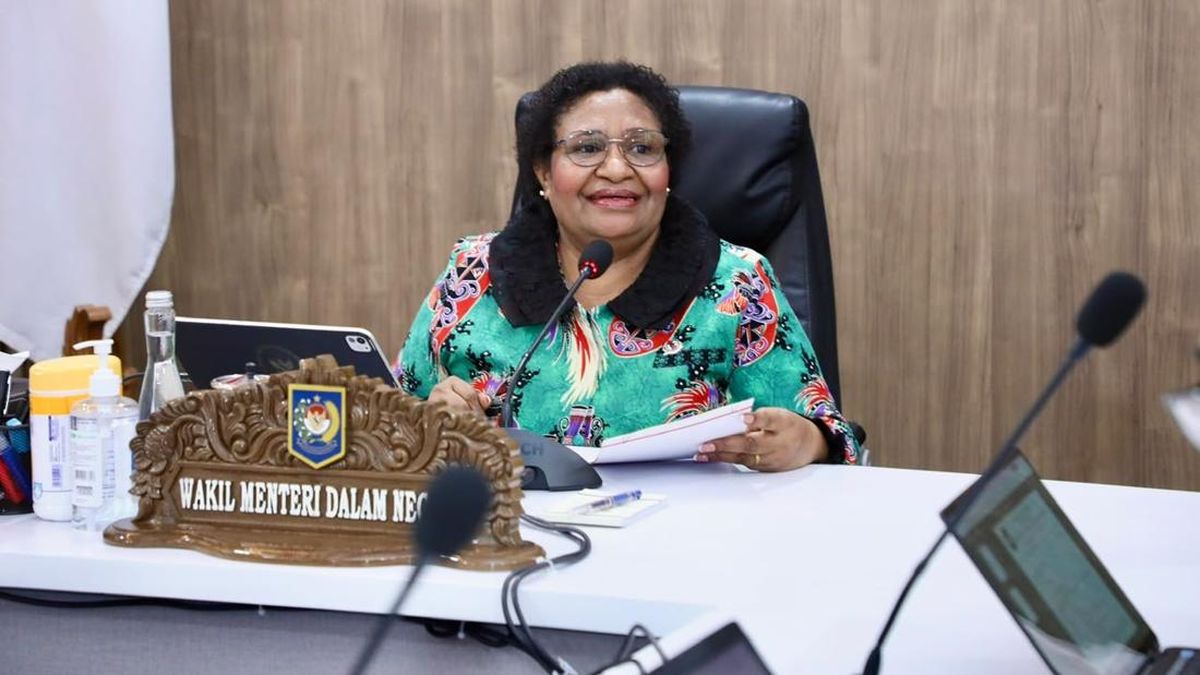
Indonesia is accelerating the distribution and use of Papua’s 2026 Special Autonomy Funds to ensure that national fiscal support produces tangible benefits for communities across the region. Deputy Minister of Home Affairs Ribka Haluk is leading cross-government efforts to help provincial and local administrations meet disbursement requirements, strengthen financial governance and deploy funding alongside the Additional Infrastructure Fund.
The initiative is designed to convert Papua’s special fiscal status into better services, stronger infrastructure and more inclusive development for residents across the easternmost part of the country.
The effort reflects a broader policy priority: ensuring that development resources reach people efficiently while maintaining accountability over public spending. Haluk said the acceleration follows direction from Home Affairs Minister Muhammad Tito Karnavian and includes continued coordination with the Ministry of Finance, the Development Finance and Supervisory Agency, Indonesia’s anti-corruption commission and local governments.
By bringing these institutions together, the government is seeking to address administrative obstacles before they delay programs intended to support health, education, connectivity and local economic opportunity.
Strengthening the Delivery of Development Finance
As adapted from reporting by CNBC Indonesia, Haluk chaired a hybrid coordination meeting on Papua’s Special Autonomy Fund governance from the Home Affairs Ministry’s headquarters in Jakarta on Oct. 8, 2026. She said the government remained committed to ensuring that the funds’ impact could be felt directly by people throughout Papua.
“We are jointly committed to making sure that the Special Autonomy Fund is truly beneficial and that its impact is felt by our communities in Papua,” she said.
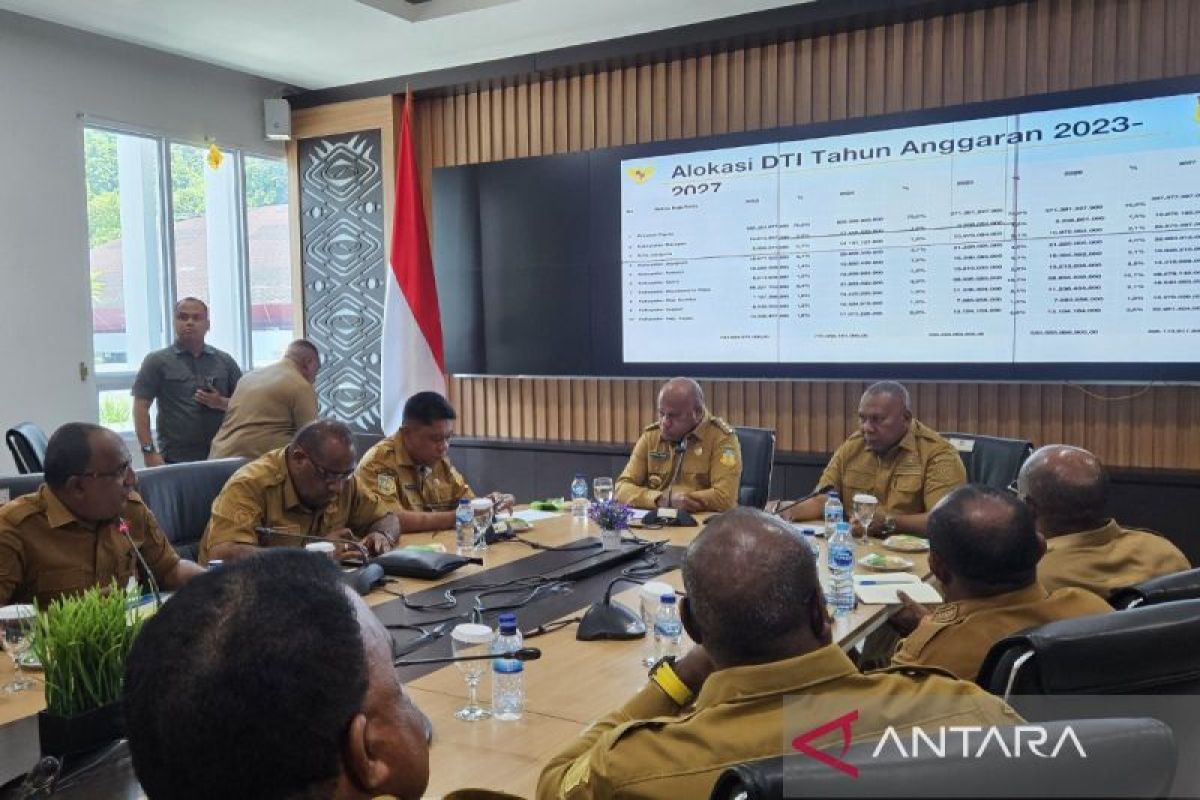
Disbursement of the 2026 Special Autonomy Fund is structured in three stages, creating a framework for orderly budgeting and implementation. The first stage, equivalent to 30% of the total allocation received by each eligible region, has been distributed in line with the target, while the second stage has begun with a target of 45%.
Most local administrations have received the second-stage transfer, although several still require assistance to complete the conditions needed for payment.
The government’s decision to maintain the Special Autonomy Fund outside broader budget-efficiency measures gives local administrations an important degree of certainty as they plan essential programs. That protection is particularly significant in a region where geography, dispersed settlements and limited transport links can raise the cost of delivering public services.
The parallel call to allocate and use the 2026 Additional Infrastructure Fund also creates an opportunity to align fiscal resources with long-term investments in roads, public facilities, digital access, clean water systems and other foundations of sustainable regional growth.
Turning Oversight Into Community Impact
Haluk said governance of the Special Autonomy Fund had improved, while emphasizing that monitoring and technical support would continue. Through its Directorate General of Regional Financial Development, the Home Affairs Ministry is assisting areas facing difficulties with disbursement and has offered further help to administrations that have not yet satisfied the required conditions.
This approach combines oversight with practical problem-solving, allowing local officials to resolve documentation, planning and compliance issues without losing valuable implementation time.
The significance of faster, better-governed funding extends beyond the transfer process itself. When resources are released on schedule and linked to credible local plans, communities are better positioned to benefit from investments in classrooms, clinics, workforce development, basic utilities and productive economic activities.
For Papua’s Indigenous communities and other residents, the objective is not simply to increase spending, but to ensure that public investment responds to local priorities, expands opportunity and supports durable improvements in living standards.
A Coordinated Path to Inclusive Growth
The meeting also recognized local governments that had completed the requirements for both the Special Autonomy Fund and the Additional Infrastructure Fund, while documenting remaining challenges for resolution. Participation by national oversight and financial institutions provides an additional layer of transparency as Papua’s administrations manage substantial development resources.
Continued cooperation will be essential to ensuring that infrastructure investment is environmentally responsible, economically useful and connected to broader programs in education, healthcare and human capital.
Papua’s development gains will ultimately be measured at the community level: by whether families can reach quality schools and health facilities, whether local businesses can connect to markets and whether young people can build livelihoods without leaving their communities. The 2026 funding process offers a structured opportunity to advance those goals by pairing predictable fiscal support with stronger administration and accountability.
With sustained coordination between Jakarta and Papua’s local governments, Special Autonomy Funds can become a more effective instrument for equitable growth, resilient infrastructure and a more empowered future across the region.