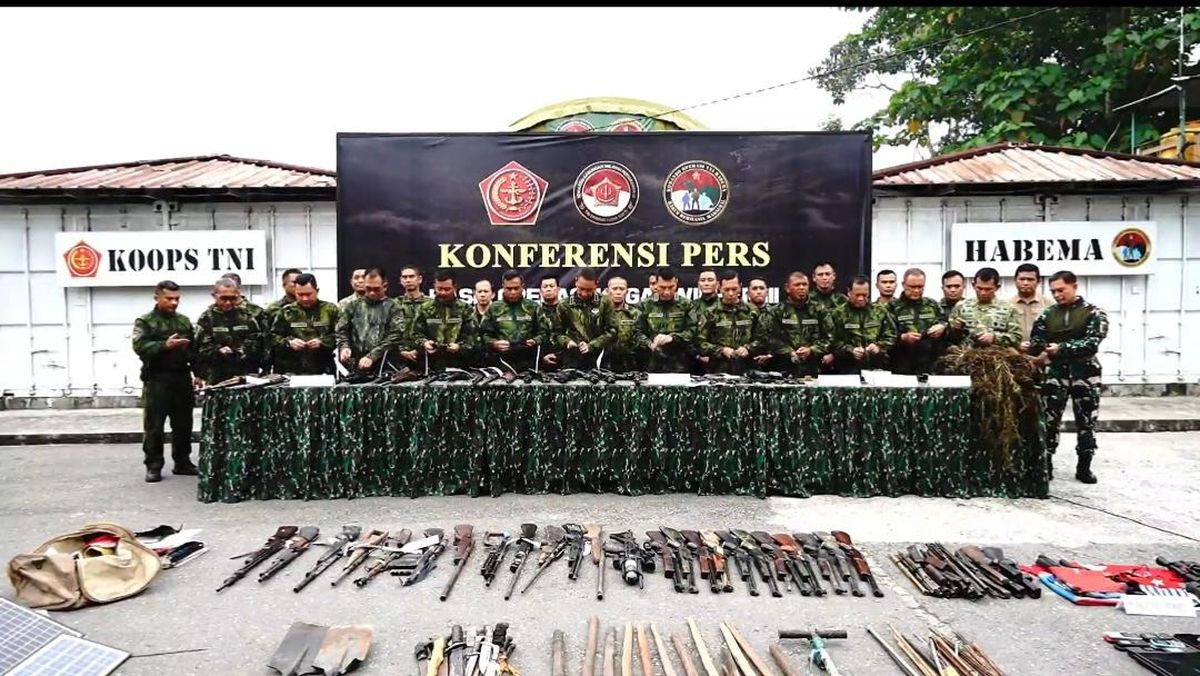
Authorities in Papua have seized firearms and ammunition from a base linked to an armed civilian group, an operation that underscores the close relationship between public safety and the region’s development prospects. The seizure, reported by Tirto.id, removes weapons that could threaten residents, disrupt transport and intimidate communities.
It also renews attention on the need to protect schools, health facilities, workers and infrastructure as Papua pursues more inclusive and sustainable growth.
The report provides limited public detail about the exact location, number and types of weapons involved, as well as the identities of those connected to the site. Those details will be important as investigators establish the origin of the arms, determine potential criminal responsibility and ensure that evidence is handled transparently.
A lawful, accountable process can help strengthen public confidence while avoiding unnecessary risks to civilians in communities already affected by insecurity.
Security as a Foundation for Development
According to reports published by Tirto.id, the seizure took place at a location associated with an armed civilian group and involved both ammunition and firearms. While the operation is primarily a public-safety matter, its wider significance extends to Papua’s economic and social transformation.
Roads, bridges, telecommunications networks and public buildings can deliver lasting benefits only when residents, construction teams and service providers are able to operate safely and consistently.
Reducing the circulation of weapons can help create the conditions for regular public services and stronger regional connectivity. Secure transport corridors allow teachers, medical personnel, agricultural buyers and essential supplies to reach remote settlements more reliably. They also give local entrepreneurs greater confidence to move products, access markets and invest in small businesses, supporting household incomes beyond the extractive and public sectors.
Protecting Communities and Human Capital
For Papua’s young population, stability is directly linked to opportunity. Schools need dependable access for educators and students, while vocational programs require a secure environment in which trainees can learn technical, digital and business skills. Health workers similarly depend on safe access to clinics and villages, particularly in areas where distance, weather and limited transport already make treatment difficult.
The seizure therefore carries an important community dimension, even as authorities continue to assess the case. Public safety measures are most effective when paired with dialogue, impartial law enforcement and practical support for residents. Investments in education, health care, local administration and youth employment can help address the social pressures that allow armed networks and illegal weapons to retain influence.
A durable response should combine enforcement with safeguards for civilians and a clear commitment to development that reaches remote communities. Authorities, traditional leaders, churches, civil-society organizations and local governments can contribute by improving early-warning systems, reporting channels and conflict-prevention programs. Such cooperation can help ensure that security operations protect communities rather than deepen fear or isolation.
Building Confidence in Papua’s Future
The reported seizure is one security event, not a measure of Papua’s entire development trajectory. Its broader lesson is that infrastructure spending and economic programs must be accompanied by institutions capable of protecting people, resolving disputes and upholding the rule of law.
If those foundations are strengthened, Papua can expand regional connectivity, improve human-capital outcomes and attract responsible investment while preserving community participation and environmental safeguards.