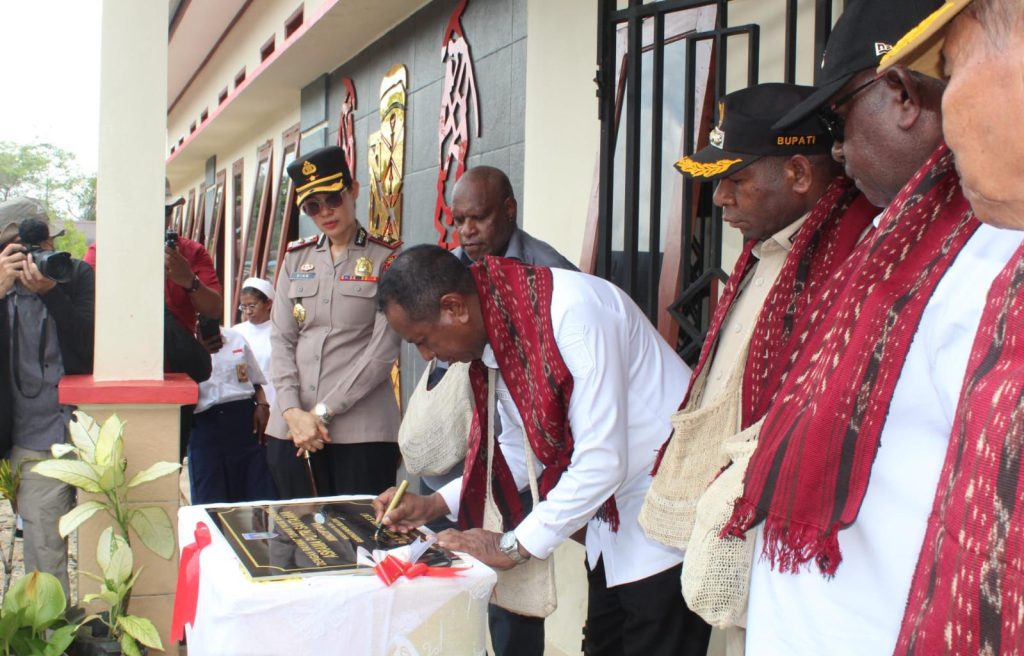
Papua Governor Matius D. Fakhiri has called for a more equitable distribution of the benefits generated by Indonesia’s Special Autonomy Fund, urging provincial and local governments to ensure that development spending produces visible improvements for Indigenous Papuans across the region.
Speaking in Jayapura on Nov. 23, Fakhiri said authorities at every level share responsibility for planning and delivering programs financed through the fund. His appeal comes as Papua marks 25 years of Special Autonomy, a significant moment for reviewing whether the policy is meeting the needs of communities throughout the province.
The governor’s message places practical public benefit, rather than the size of budget allocations alone, at the center of Papua’s development assessment.
According to reports published by ANTARA News Papua, Fakhiri said the anniversary should serve as an opportunity for all regional governments to evaluate the effectiveness of Special Autonomy spending and identify ways to improve its impact. The policy was introduced to give Papua greater fiscal and administrative capacity to address the region’s distinctive development challenges.
In that context, the governor emphasized that funding must be directed toward programs that respond to real community needs and are implemented with careful oversight. His position reflects a broader shift toward measuring development through outcomes such as improved livelihoods, stronger public services and greater inclusion.
Turning Public Funds Into Measurable Progress
Fakhiri warned that approved budgets should not remain disconnected from the daily experiences of the people they are intended to serve. He said planning and implementation must be examined closely so that Special Autonomy resources are targeted effectively and translated into concrete benefits.
That approach is particularly important in a geographically challenging region, where distance, limited transport links and uneven access to services can make public investment difficult to deliver. Stronger project preparation can help ensure that spending supports durable infrastructure, education, healthcare, local economic opportunities and other priorities identified by communities.
The governor’s emphasis on direct impact also underlines the importance of sustainability in Papua’s development model. Investments should not be judged solely by the amount disbursed or the number of projects announced, but by whether they continue to improve living conditions after construction or initial funding has ended.
Properly designed programs can strengthen local economies while protecting the region’s environmental assets, including forests, rivers and coastal areas that support community livelihoods. Transparent monitoring and public accountability would further help residents understand how funds are used and whether promised results are being achieved.
Coordination Across Papua’s Government
Fakhiri stressed that equitable development will require close cooperation between the provincial government and administrations in Papua’s cities and regencies. Without coordination, programs financed through the same Special Autonomy framework risk operating in isolation, creating gaps in service delivery or duplicating investments in some areas while other communities remain underserved.
Shared planning can help align regional priorities, improve the use of technical expertise and ensure that infrastructure and social programs reinforce one another. It can also make it easier to direct support toward remote settlements and communities that face the greatest barriers to education, healthcare, transport and employment.
As adapted from reporting by ANTARA News Papua, the governor said coordination must continue so that development programs support one another and their benefits reach people across the entire province. Such cooperation is essential for connecting public investments into a wider development network: roads and transport links can improve access to schools and clinics, while stronger digital and administrative systems can bring public services closer to isolated households.
For Indigenous Papuans, this integrated approach can create more meaningful participation in the regional economy and public decision-making. It also gives local governments a clearer role in translating broad policy commitments into community-level results.
A Development Measure Rooted in Community Welfare
Fakhiri’s central argument is that the success of Special Autonomy should be assessed through improvements in people’s lives, especially among Indigenous Papuans, rather than through financial absorption alone. That principle encourages governments to focus on whether families experience better access to essential services, more secure livelihoods, improved learning opportunities and greater resilience.
It also supports a more inclusive understanding of progress, one that recognizes the needs of urban residents, rural communities and people living in remote areas. By placing community welfare at the heart of budget evaluation, Papua can strengthen public confidence in the purpose of Special Autonomy.
The 25-year milestone therefore offers Papua an opportunity to refine its development strategy and make public investment more responsive, coordinated and accountable. Fakhiri’s call is not simply for larger budgets, but for better decisions about where funds go, how projects are delivered and whether results are sustained.
Continued collaboration among provincial, city and regency authorities will be vital to building infrastructure and human capital while ensuring that economic growth reaches communities fairly. If that focus is maintained, Special Autonomy funding can become an increasingly effective instrument for inclusive progress across Papua.