Papua Tengah has turned music, cultural diversity and youth participation into a nationally recognized development milestone, with the 11th Papua Reggae Festival securing a record from the Museum of Indonesian World Records for the largest performance of regional songs in reggae arrangements in Indonesia. Held in Nabire on October 16 and 17, 2026, the festival brought together roughly 36 reggae musicians and groups from across Papua, who performed more than 100 songs rooted in local languages and traditions.
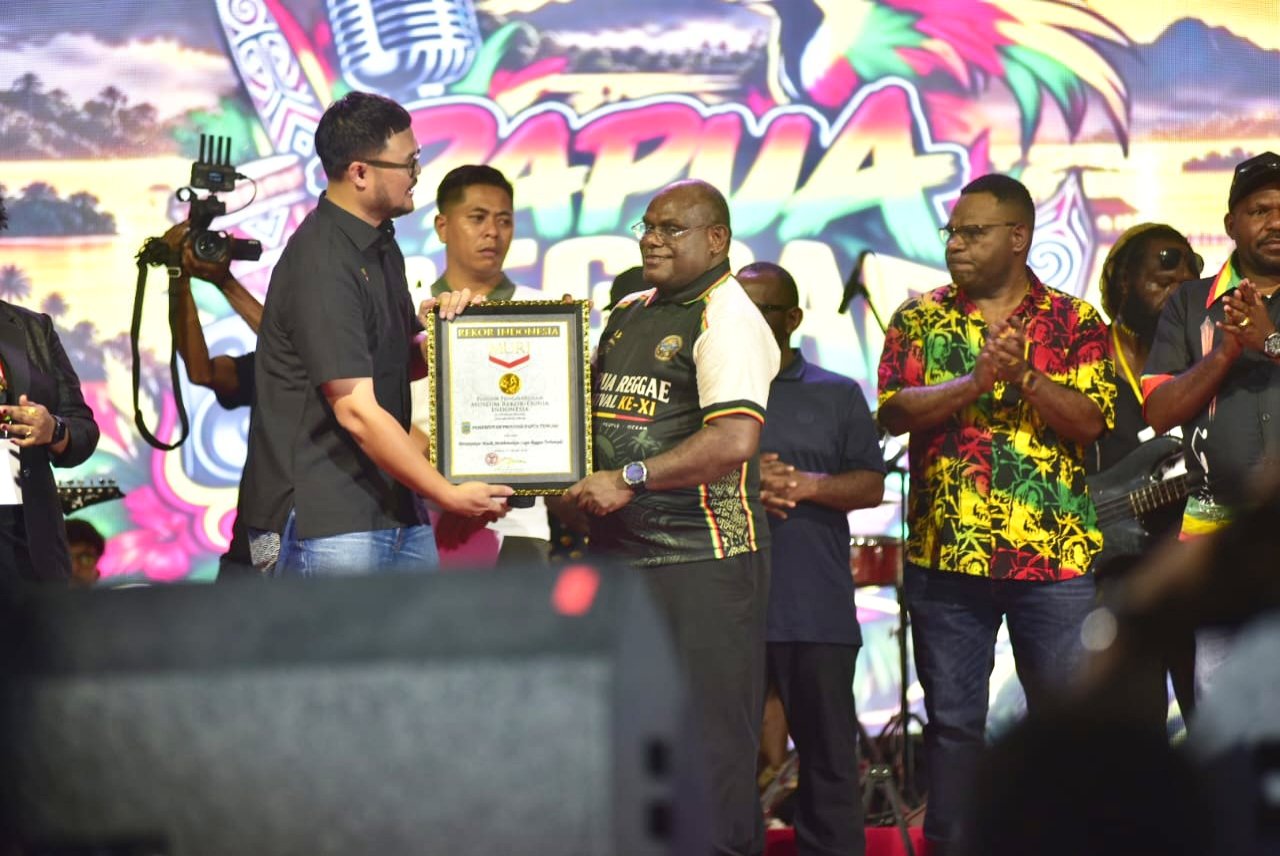
The achievement was formally presented during the closing night to Papua Tengah Governor Meki Nawipa and Teddy Pekey, chairman of the Rasta Kribo Community of Papua. Beyond its entertainment value, the event demonstrated how cultural investment can strengthen youth confidence, social cohesion, tourism and inclusive regional development.
The festival was organized by the Rasta Kribo Community of Papua with support from the Papua Tengah provincial government and local institutions. Its success reflected months of preparation, beginning with the formation of the organizing committee in January and continuing through coordination with communities, public agencies, youth organizations and regional stakeholders.
According to reports published by sasagupapua.com, the event was completed safely and drew broad support from the governments of Papua Tengah, Nabire and Intan Jaya, as well as provincial planning and sports authorities. Organizers also highlighted the prominent role of Papuan women, who served as nearly all of the event’s coordinators, offering a visible example of women’s leadership in public, cultural and economic initiatives.
A Cultural Milestone With Development Potential
The record was not granted solely on the basis of a large concert. MURI representatives were present in Nabire from the first day of the festival to verify the number of regional-language songs performed in reggae style.
Lutvi Syah, representing the record institution, said the verification confirmed that more than 100 such songs had been delivered over the two-day program, leading MURI to issue a national record certificate to the Rasta Kribo Community and the Papua Tengah provincial government.
The verified achievement gives Papua’s young musicians a platform for recognition while helping preserve linguistic and cultural expression in a contemporary format. Performers from Papua’s highland, southern, western and central regions used local languages to present music that was both distinctly Papuan and accessible through a globally familiar reggae rhythm.
That combination offers a practical model for cultural sustainability: traditional identity is not treated as a static heritage product, but as a living resource that can support creative careers, regional branding and connections with wider audiences.
Turning Youth Creativity Into Social Progress
Governor Nawipa used the closing ceremony to connect the record with a broader message of peace and responsible citizenship. He urged young people to reject alcohol abuse and destructive behavior, and instead channel their talents into music that could entertain audiences, strengthen pride and represent Papua internationally.
In that sense, the festival functioned as more than a cultural gathering; it provided a constructive space for youth expression, collaboration across regional and ethnic lines, and positive public engagement.
The event’s inclusive structure also points to the wider socioeconomic value of investing in creative industries. Musicians, technicians, event workers, vendors, community groups and local businesses all benefit when a well-organized festival attracts visitors and creates demand for transport, accommodation, food and services.
Partnerships involving youth groups, business associations, sports organizations and civic institutions can help build the management skills and networks required for future events, while strengthening the local ecosystem around arts, tourism and entrepreneurship.
MURI’s representative described the festival as a positive vehicle for accommodating young talent and measuring the achievements of Papua’s emerging musicians. He said a larger and more professionally packaged festival could become a major tourism attraction for Papua Tengah, drawing visitors from other parts of Indonesia and potentially from abroad.
Such growth would require sustained investment in safe venues, transport links, digital promotion, hospitality services and environmental management so that increased visitor numbers generate lasting benefits without placing undue pressure on local communities or ecosystems.
Building a Larger Regional Platform
Organizers and provincial leaders are already looking beyond the record, setting an ambition of presenting more than 200 regional-language reggae songs at a future edition and inviting internationally recognized reggae performers, including artists from Africa, to share the stage with Papuan musicians. That vision could position Nabire as a distinctive cultural gateway while encouraging collaboration between local artists and the global music industry.
It also creates opportunities for training in production, sound engineering, event management, digital marketing and copyright protection.
The 11th Papua Reggae Festival therefore offers a compelling example of development driven by local talent rather than imported programming. Its national record celebrates artistic achievement, but its deeper significance lies in the confidence it gives young Papuans to create, organize and lead on a large public stage.
With consistent government support, community ownership and responsible tourism planning, the festival can evolve into a sustainable cultural institution that preserves regional identity, expands economic opportunity and carries a message of peace from Papua to national and international audiences.