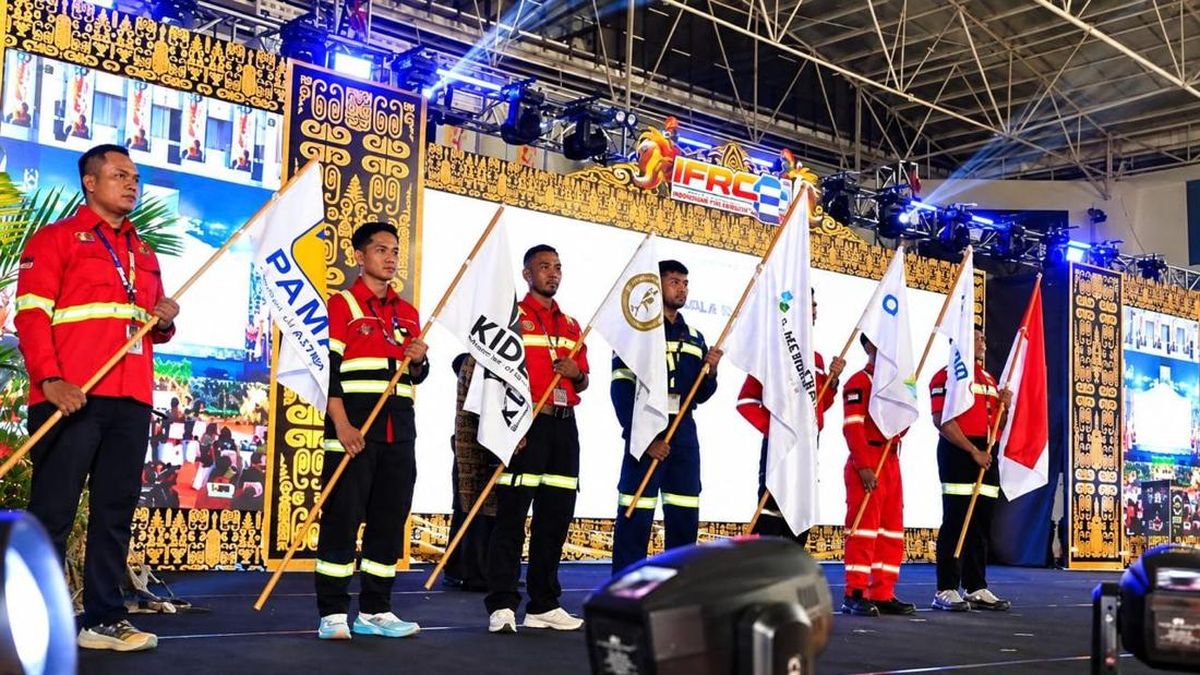
Timika, Central Papua, is hosting Indonesia’s eighth Indonesian Fire and Rescue Competition from October 24 to 31, 2026, bringing together 17 teams to strengthen emergency response, workplace safety and community preparedness. Hosted by PT Freeport Indonesia (PTFI), the event is turning Papua into a national learning hub for fire and rescue expertise while connecting companies, government agencies, security institutions and local communities.
Under the theme “Growing Together with Papua, Creating for Indonesia,” the competition highlights how skills developed in the region can support safer and more resilient development nationwide.
The event reflects a broader effort to make safety an integral part of Indonesia’s economic and industrial progress, particularly in regions where mining, energy and infrastructure operations require highly trained emergency personnel. According to reports published by CNN Indonesia, PTFI has previously hosted the competition in 1996 and 2005, making its return to Timika an important milestone for Papua’s institutional and human-capital development.
Rather than focusing solely on competition, organizers are positioning the gathering as a forum for sharing operational experience, improving coordination and building a culture of preparedness that reaches beyond company sites.
A Strategic Milestone for Emergency Preparedness
PTFI President Director Tony Wenas said the competition should help participants expand professional networks, sharpen technical capabilities and develop shared readiness for emergencies. He emphasized that effective disaster response cannot be carried out by one institution alone, requiring collaboration among businesses, the Indonesian military, the national police, the National Search and Rescue Agency, regional disaster-management authorities and other relevant bodies.
His warning is particularly timely as weather patterns influenced by El Niño can bring drier conditions, higher temperatures and an increased risk of fires.
“The central spirit of this event is safety, a fundamental value that must become an integral part of every company and every individual,” Tony said, in remarks reported by CNN Indonesia. That message places prevention alongside response, encouraging organizations to identify hazards, train personnel and strengthen procedures before an emergency occurs.
In practical terms, the competition allows teams to test coordination, discipline and decision-making under demanding conditions while sharing approaches that can be adapted across Indonesia’s diverse industrial and geographic environments.
Central Papua Governor Meki Fritz Nawipa welcomed PTFI’s role as host, describing the event as highly significant for the province and as a value that should be preserved for the future. His support underscores the importance of partnerships between industry and regional government in building safer communities and protecting workers, residents and public assets.
For Papua, the gathering also demonstrates the province’s capacity to host a national-scale professional event and contribute expertise to Indonesia’s wider emergency-management network.
Taking Safety Education Beyond the Workplace
The competition’s influence extends into schools through the Safety Goes to School program, in which participating teams are engaging more than 1,000 junior and senior high school students in Mimika. Students are being introduced to the discipline, equipment and preparedness practices used by professional rescue teams, while live demonstrations provide a practical and memorable way to understand emergency risks.
Governor Nawipa said the program offers important education for young people and helps prepare them to face future challenges with greater awareness and confidence.
This investment in student awareness gives the event a lasting social dimension, linking specialized industrial knowledge with everyday public safety. Young people who learn how to recognize hazards, respond calmly and understand the importance of teamwork can carry those lessons into their homes, schools and future workplaces.
It also creates a pathway for Papua’s next generation to view emergency services, technical operations and safety management as valuable fields for education and employment.
Building Skills for Inclusive Regional Growth
Tri Winarno, director general of minerals and coal at Indonesia’s Ministry of Energy and Mineral Resources, said fire and rescue personnel are the frontline of emergency management and must receive continuous investment in competence. He urged participants to use IFRC as a space for learning, exchanging knowledge and improving skills that can be applied directly to company operations.
“No trophy or championship title is more valuable than the safety of every individual,” Tri said, reinforcing the principle that productivity and economic growth must never be separated from human protection.
Organized by the Indonesian Association for Emergency Response in the Mining and Energy Sector, the competition is designed to improve professional competence, strengthen collaboration and establish a durable culture of safety and emergency readiness. Its return to Timika shows how Papua can serve not only as a center of natural-resource production, but also as a source of expertise, leadership and innovation in sustainable development.
By combining technical competition, inter-agency cooperation and school-based education, IFRC 2026 offers a practical model for making regional growth safer, more inclusive and better prepared for the environmental and operational challenges ahead.

