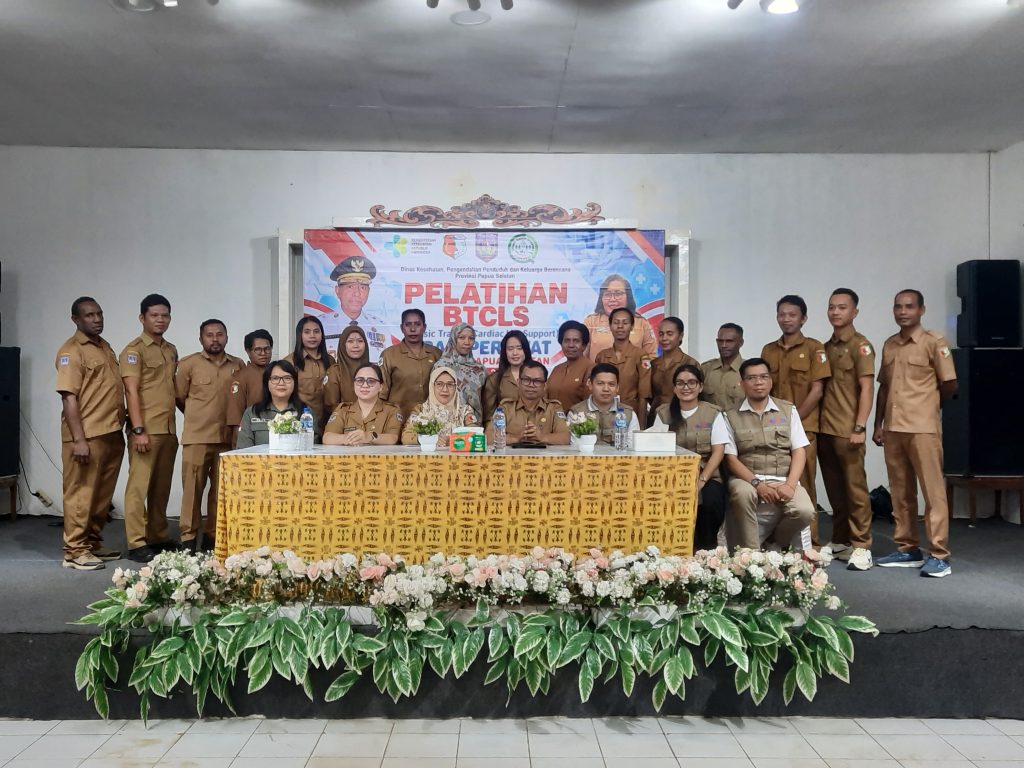
Southern Papua has launched Basic Trauma and Cardiac Life Support training, a healthcare workforce initiative designed to strengthen emergency response capacity across Indonesia’s newest province. The program focuses on equipping medical personnel with practical skills for recognizing and managing life-threatening trauma and cardiac emergencies.
As adapted from reporting by InfoPublik, the training reflects a broader effort to ensure that communities in remote and rapidly developing areas can receive safer, faster and more professional care.
For Southern Papua, investments in clinical capability are particularly significant because geography can complicate access to advanced medical facilities. Large distances, limited transport options and dispersed settlements can make the first minutes after an accident or sudden medical crisis decisive.
By improving the competence of healthcare workers at the point of first contact, BTCLS training can help strengthen the wider emergency-care chain while patients await referral, transport or specialist treatment.
Building a Stronger Emergency-Care System
BTCLS, commonly known as Basic Trauma and Cardiac Life Support, is centered on essential procedures for responding to severe injuries, cardiac arrest and other urgent conditions. Its value lies not only in technical instruction, but also in promoting disciplined assessment, rapid prioritization, teamwork and clear communication under pressure.
According to reports published by InfoPublik, the Southern Papua provincial administration is using the training as part of a focused effort to develop health-sector human resources.
The initiative is important because emergency medicine depends on coordinated action rather than individual expertise alone. Healthcare workers must be able to identify danger signs, stabilize patients, begin life-saving interventions and determine when escalation or referral is required. Consistent training can also encourage common protocols across facilities, helping doctors, nurses, midwives and other health professionals work more effectively as a single response team.
Human Capital for Inclusive Regional Development
The benefits of a program such as this extend beyond hospital walls. Better-prepared health workers can reinforce services in community health centers, district hospitals, mobile clinics and other frontline settings where residents may first seek assistance. In communities separated by rivers, wetlands, forested terrain or long road journeys, stronger initial care can reduce preventable complications and give families greater confidence in the local health system.
Strengthening emergency skills also supports Southern Papua’s wider development agenda. Infrastructure, connectivity and economic activity can improve living standards, but their impact is more inclusive when residents can rely on capable public services, including healthcare. A trained workforce contributes to human security, protects the wellbeing of workers and families, and helps create the conditions for education, employment and investment to progress sustainably.
From Training to Long-Term Resilience
The launch of BTCLS training should therefore be viewed as a foundation for continuing professional development rather than a one-time event. Its long-term impact will depend on regular refresher instruction, access to appropriate equipment, reliable referral networks and emergency transport that links remote communities with higher-level facilities.
Sustained provincial support can help embed these capabilities into routine health planning and ensure that skills remain effective when emergencies occur.
Southern Papua’s investment in emergency-care competence illustrates how regional transformation is built through both physical infrastructure and people. Roads, communications networks and healthcare facilities are essential, but trained professionals determine whether those assets deliver timely and humane services in moments of greatest need.
By advancing BTCLS education, the province is taking a practical step toward a more resilient, responsive and equitable healthcare system for communities across Papua’s southern frontier.

